“The members of the department became like the Athenians who, according to the Apostle Paul, "spent their time in nothing else, but either to tell or to hear some new thing." Anyone who thought he had a bright idea rushed out to try it out on a colleague. Groups of two or more could be seen every day in offices, before blackboards or even in corridors, arguing vehemently about these 'brain storms.' It is doubtful whether any paper ever emerged for publication that had not run the gauntlet of such criticism. The whole department thus became far greater than the sum of its individual members.”
Quote by Joel Henry Hildebrand
Author
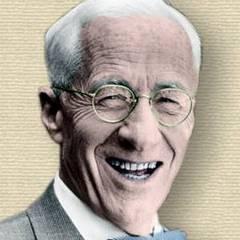
Joel Henry Hildebrand
Joel Henry Hildebrand was an outstanding chemist known for his contributions to physical chemistry. He was born on November 16, 1881, and passed away on April 30, 1983. Hildebrand's work in electrochemistry and solution chemistry had a profound impact on the field of chemistry. more
You May Also Like
Source: FROM EROS TO GAIA
“The same ideas, one must believe, recur in men's minds not once or twice but again and again.”
Source: Complete Works of Aristotle, Volume 1: The Revised Oxford Translation
Source: The Sense of Beauty
“My biggest accomplishment has been making a transition from athlete to author.”