“Where is the security for property, for reputation, for life, if the sense of religious obligation deserts the oaths . . . ?”
Quote by George Washington
Work
The Writings of George Washington: Being His Correspondence, Addresses, Messages, and Other Papers, Official and Private, Selected and Published from the Original Manuscripts; with a Life of the Author, Notes, and Illustrations
The Writings of George Washington offers a detailed insight into the life and work of the first President of the United States. It contains a vast array of letters, addresses, and official documents, providing a unique perspective on Washington's leadership and his role in the early years of the United States. The book is accompanied by a biography that delves into Washington's personal life and career, as well as extensive notes and illustrations that enhance the reader's understanding of the historical context and significance of the documents. more
Author
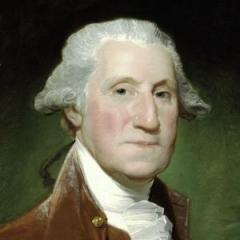
George Washington
George Washington was the first President of the United States and a key figure in the American Revolutionary War. Born on February 22, 1732, and died on December 14, 1799, Washington is known for his strong leadership and belief in democracy, playing a crucial role in American history. more
You May Also Like
Source: Jefferson: Political Writings
Source: The Writings: Being His Correspondence, Addresses, Messages, and Other Papers, Official and Private, Selected and Published from the Original Manuscripts : with a Life of the Author, Notes and Illustrations
Source: Letters: 1793-1813
Source: A Diary of the French Revolution
Source: History of the United States: to which is prefixed a brief historical account of our [English] ancestors, from the dispersion at Babel, to their migration to America, and of the conquest of South America, by the Spaniards
Source: The Thomas Paine Collection: Common Sense, Rights of Man, Age of Reason, An Essay on Dream, Biblical Blasphemy, Examination Of The Prophecies
Source: Washington's Farewell Address to the People of the United States of America: Published in September, 1796