Quotessence
Home / Quotes / Quote by Alexandre Dumas

Quote by Alexandre Dumas

“I began a poem in lines of one syllable. It's rather difficult, but the merit of all things lies in their difficulty. The subject matter is gallant. I'll read you the first canto; it's four hundred verses long and takes one minute.”

Quote by Alexandre Dumas

Work

The Three Musketeers

Alexandre Dumas' 'The Three Musketeers' is a renowned historical novel that delves into the lives of d'Artagnan and his three fellow Musketeers, Athos, Porthos, and Aramis. The story is filled with intrigue, swordplay, and political machinations, set against the backdrop of the French monarchy. The novel is celebrated for its vivid characters, thrilling plot, and its exploration of themes such as loyalty, friendship, and honor. more

Author

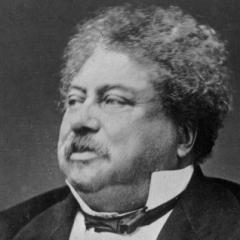
Alexandre Dumas
Alexandre Dumas

Alexandre Dumas, a renowned French writer, was born on July 24, 1802, and died on December 5, 1870. He is famous for his historical and adventure novels, with notable works including 'The Three Musketeers' and 'The Count of Monte Cristo'. more

You May Also Like

“Ultimately, said the colonel, the checkpoint is a two-way street, somebody is always crossing from one side to the other, meaning, added the colonel, that there would always be work for those charged with its maintenance. But, the commander dared interject, does that mean our position in the conflict will change, or that we'll turn our backs on old alliances and form new ones? The colonel's face fell, and he said the commander couldn't have heard any such thing from him. He, meaning the colonel, had merely served as a bearer of tidings, a courier, a screw in an intricate mechanism, no more. If the colonel was nothing but a screw, thought the commander, then what could he--meaning the commander--say for himself? He wasn't a screw or even a tack, smaller yet, or as thin as a straight pin...”

“And while he mused over the last few weeks, the thought kept bothering him that, without his knowledge, of course, the whole company had been part of a cruel experiment, and they were sacrificed so insights on the structure of warfare could be gathered, which, in other words, meant that no one was to blame for what happened to the soldiers and commander... an army bureaucrat had had the bright idea that the time was ripe for a study of the impact on soldiers of a sudden shift in the enemy's standing (in other words, when friend becomes foe, or vice versa). What happened presumed not a reality-based result--the outcome of earlier events in this same reality--but instead a faux reality, .a strategy game like Battleship...”

“Poor bastard, I thought, listening to him. He’s trying to hide from us. He’s dying, and he knows we want to kill him. What a fate: to gasp your life out all alone in the mud of a dirty little creek, helpless to hold off the slow death that is inside you and the quicker death that is walking up on you on the other side of the water. A death without love, a death without hope. God, who invented war? But if he gets back alive, I may be dead.”