“One of the commonest things to do with savings is to lend them to some Government. In view of the fact that the bulk of the public expenditure of most civilized Governments consists in payment for past wars or preparation for future wars, the man who lends his money to a Government is in the same position as the bad men in Shakespeare who hire murderers. The net result of the man's economical habits is to increase the armed forces of the State to which he lends his savings. Obviously it would be better if he spent the money, even if he spent it in drink or gambling.”
Quote by Bertrand Russell
Work
In Praise of Idleness
This book delves into the concept of idleness, arguing for its importance in personal and societal well-being, and critiques the modern work ethic. more
Author
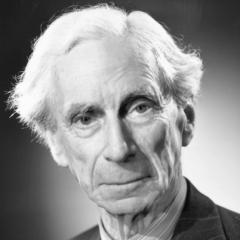
Bertrand Russell
Bertrand Russell was a British philosopher, mathematician, and logician born on May 18, 1872, and died on February 2, 1970. He is known for his contributions to logic and mathematics, particularly in the fields of mathematical logic and philosophical analysis. His works spanned a wide range of subjects, including ethics, political philosophy, history, and literary criticism. more
You May Also Like
Source: The Dresden Files Collection 1-6
“Any man who retreats into a cave which has only one opening deserves to die.”
Source: DUNE
Source: The Collector
Source: The Collector
Source: An Old-Fashioned Girl: Top Novelist Focus
“Your wide eyes are the only light I know from extinguished constellations.”
Source: I explain a few things: selected poems