“Our large trading cities bear to me very nearly the aspect of monastic establishments in which the roar of the mill-wheel and the crane takes the place of other devotional music, and in which the worship of Mammon and Moloch is conducted with a tender reverence and an exact propriety; the merchant rising to his Mammon matins, with the self-denial of an anchorite, and expiating the frivolities into which he maybe beguiled in the course of the day by late attendance at Mammon vespers.”
Quote by John Ruskin
Work
The Political Economy of Art: Being the Substance (with Additions) of Two Lectures Delivered at Manchester, July 10th and 13th, 1857
The Political Economy of Art is a compilation of lectures that delve into the relationship between art and the principles of political economy. The lectures, delivered in Manchester in 1857, examine how economic factors influence the creation, distribution, and appreciation of art. The text offers insights into the historical context of the period and the evolving role of art within society. more
Author
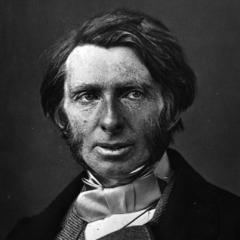
John Ruskin
John Ruskin was an influential British art critic, writer, and social critic. Known for his profound insights into art, architecture, and social issues, he had a significant impact on the aesthetics and culture of the Victorian era. more
You May Also Like
Source: pt. VI: Of leaf beauty. pt. VII: Of cloud beauty. pts. VIII-IX: Of ideas of relation
Source: The Stones of Venice
“There is no solemnity so deep, to a right-thinking creature, as that of dawn.”
Source: The fall
“Every duty we omit obscures some truth we should have known.”
Source: The Ethics of the Dust
Source: The Stones of Venice...
Source: The Stones of Venice
“There are no laws by which we can write Iliads.”
Source: The fall