Quotessence
Home / Quotes / Quote by Kazuo Ishiguro

Quote by Kazuo Ishiguro

“I actually dislike, more than many people, working through literary allusion. I just feel that there's something a bit snobbish or elitist about that. I don't like it as a reader, when I'm reading something. It's not just the elitism of it; it jolts me out of the mode in which I'm reading. I've immersed myself in the world and then when the light goes on I'm supposed to be making some kind of literary comparison to another text. I find I'm pulled out of my kind of fictional world, I'm asked to use my brain in a different kind of way. I don't like that.”

Quote by Kazuo Ishiguro

Author
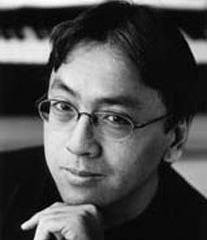
Kazuo Ishiguro
Kazuo Ishiguro

Kazuo Ishiguro is a Japanese-born British novelist known for his unique literary style and profound insights into human nature. His works often explore themes of memory, identity, and common human emotions. Born on November 8, 1954, Ishiguro's career began with the publication of his first novel 'When Breath Becomes Air' in 1982, which received widespread acclaim. more

You May Also Like

“I think whatever we've done as a band at The Clientele, we've done because it's so natural. Our "old" sound isn't really like any actual bands from old times. We take elements of past music styles and past sounds as a way to... this is going to sound very pretentious and perhaps overly thought-out, but as a way to strike chords of vague nostalgia, and strike chords of, "I've heard this before somewhere." That's what a lot of our music is about in terms of the words and ideas behind it, so we really use old sounds as a way to serve that agenda.”

“There questions of wanting to be an artist, and what does that mean, what makes you an artist? Are you an artist if you're in a gallery in New York and not an artist if you're doing it at home? Do you need legitimation to count? If you've been acculturated to believe that you have certain obligations - familial, social, human - if multitasking has been your forte and that's what's been praised and rewarded, where do you find the single-mindedness, the selfishness to do something like art? I think those are questions that arise differently for women and for men.”

“I spoke to my father - my father's from Pakistan and he's also a lawyer - I said to him, "Well what does the Shari'a say?" And he said, "Well, of course it doesn't justify suicide bombs," but he didn't seem to know where the Shari'a came from or what it was all about. The more I asked people in my family as well as friends, the more I realized that there seemed to be widespread ignorance in the Muslim community. And that's something which I actually found to be the case over the next two and a half, three years I spent writing the book.”

“I realized that the ignorance was profound. I don't mean that in a pejorative sense, it's just that people didn't know what the Shari'a was, as such. They knew that it was something good. I should say perhaps that the Shari'a, etymologically in Arabic, means a desert path to water. It means a path towards salvation, in the seventh-century context, to the desert people. If you have a path to water, that's the path you want to take to get you where you want to get to; where you should get to. And that much was clear but beyond that people didn't know what the rules were.”