Quotessence
Home / Quotes / Quote by Max Planck

Quote by Max Planck

“The history of all times and nations teaches us that exactly in the naïve, unshakable belief, furnished by religion in active life of believers, originate the most intense motives for the most significant creative performance, not only in the field of arts and sciences but also in politics.”

Quote by Max Planck

Author
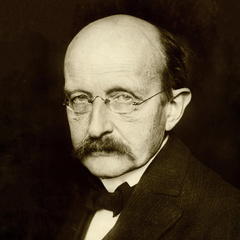
Max Planck
Max Planck

Max Planck, born on April 23, 1858 in Germany, died on October 4, 1947. He was a renowned German physicist and one of the founders of quantum theory, winning the Nobel Prize in Physics in 1918 for his discovery of Planck's constant. more

You May Also Like

“I'm anticlerical, not antireligion. If somebody believes there is God, I'm not interested in trying to persuade that person there is no intelligent design to the universe. Where I become interested and wake up is about the temporal power of religion, things like prayer in schools, or Catholic-secular hospital mergers.”

“As Stephen Jay Gould pointed out in Time, in no other Western country is the teaching of Evolution regarded as controversial. Throughout the world, one way or another, most Christian denominations have managed to reconcile belief in God with belief in the mechanisms of natural selection. A French or German or Scandinavian politician who called for students to entertain as a reasonable deduction from existing evidence the proposition that Earth is at most 10,000 years old would be bundled off to a mental hospital.”

“Right now religion has the romantic aura of the forbidden - Christ is cool. We need to bring it into the schools, which kids already hate, and associate it firmly with boredom, regulation, condescension, makework and de facto segregation ... Prayer in the schools will rid us of the bland no-offense ecumenism that is so infuriating to us anticlericals: Oh, so now you say Jews didn't kill Christ - a little on the late side, isn't it?”

“I do not expect that the mere fact that I was once an evangelical apologist and now see things differently should itself count as evidence that I must be right. That would be the genetic fallacy. It would be just as erroneous to think that John Rankin must be right in having embraced evangelical Christianity since he had once been an agnostic Unitarian and repudiated it for the Christian faith.”