Quotessence
Home / Quotes / Quote by John Betjeman

Quote by John Betjeman

“From the geyser ventilators autumn winds are blowing down on a thousand business women having baths in Camden Town. Waste pipes chuckle into runnels, steam's escaping here and there, morning trains through Camden cutting shake the Crescent and the Square. Early nip of changeful autumn, dahlias glimpsed through garden doves, at the back precarious bathrooms jutting out from upper floors; and behind their frail partitions business women lie and soak, seeing through the draughty skylight flying clouds and railway smoke. Rest you there, poor unbeloved ones, lap your loneliness in heat. All too soon the tiny breakfast, trolley-bus and windy street!”

Quote by John Betjeman

Work

Few Late Chrysanthemums

Browse quotes and source details for this work. more

Author
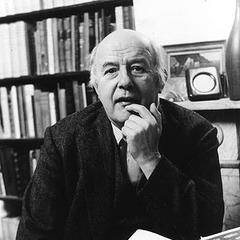
John Betjeman
John Betjeman

John Betjeman was a renowned British poet known for his light-hearted style and passionate depictions of the English countryside and cities. His poetry covered a wide range of themes, from personal抒情 to social commentary. more

You May Also Like

“[T]he enduring problem for liberals, as for everyone else, is not whether history will judge them wise or foolish regarding the war on terrorism; it is, rather, the way that the past decade has splintered them away from other Americans. This fracture comes with a steep price: in today's toxic atmosphere, liberals are no less cynical, shortsighted, and parochial than anyone else, and they understand their fellow-Americans just as badly as they themselves are understood. When liberals look at red-state voters, they see either a mob of pious know-nothings or the insensible victims of militarism and class warfare. Yet.... [such people] defy fixed categories, which means that they have to be figured out the hard way--on their own terms.”

“A Yorkshireman in the South will always take care to let you know that he regards you as an inferior. If you ask him why, he will explain that it is only in the North that life is 'real' life, that the industrial work done in the North is the only 'real' work, that the North is inhabited by 'real' people, the South merely by rentiers and their parasites. The Northerner has 'grit', he is grim, 'dour', plucky, warm-hearted and democratic; the Southerner is snobbish, effeminate and lazy - that at any rate is the theory. Hence the Southerner goes north, at any rate for the first time, with the vague inferiority-complex of a civilized man venturing among savages, while the Yorkshireman, like the Scotchman, comes to London in the spirit of a barbarian out for loot.”

“The four examples above - the term villain, the Indian caste system, national image, and a historical period - differ in their parameters of analysis. Yet, they all suffered conscious and systematic degradation of meaning and image in some aspects. Villain is a word that has suffered etymological deterioration. The Vaishyas and the Shudras in the Indian caste system systematically lost their equal stature to the Brahman and the Kshatriya classes. Similarly, while some countries such as Iraq and North Korea were subject to deliberate attempts of defamation by developed nations, the bright sides of the Dark Ages in Europe remain unacknowledged.”

“Moderns think of the earth as a globe, as something one can easily get round, the spirit of a schoolmistress. This is shown in the odd mistake perpetually made about Cecil Rhodes. His enemies say that he may have had large ideas, but he was a bad man. His friends say that he may have been a bad man, but he certainly had large ideas. The truth is that he was not a man essentially bad, he was a man of much geniality and many good intentions, but a man with singularly small views. There is nothing large about painting the map red; it is an innocent game for children. It is just as easy to think in continents as to think in cobble-stones. The difficulty comes in when we seek to know the substance of either of them. Rhodes' prophecies about the Boer resistance are an admirable comment on how the "large ideas" prosper when it is not a question of thinking in continents but of understanding a few two-legged men. And under all this vast illusion of the cosmopolitan planet, with its empires and its Reuter's agency, the real life of man goes on concerned with this tree or that temple, with this harvest or that drinking-song, totally uncomprehended, totally untouched. And it watches from its splendid parochialism, possibly with a smile of amusement, motor-car civilization going its triumphant way, outstripping time, consuming space, seeing all and seeing nothing, roaring on at last to the capture of the solar system, only to find the sun cockney and the stars suburban.”