Quotessence
Home / Quotes / Quote by Aldous Huxley

Quote by Aldous Huxley

“There will be, in the next generation or so, a pharmacological method of making people love their servitude, and producing dictatorship without tears, so to speak, producing a kind of painless concentration camp for entire societies, so that people will in fact have their liberties taken away from them, but will rather enjoy it, because they will be distracted from any desire to rebel by propaganda or brainwashing, or brainwashing enhanced by pharmacological methods. And this seems to be the final revolution”

Quote by Aldous Huxley

Author
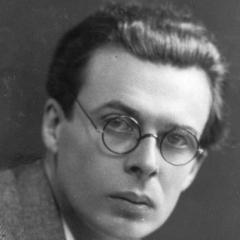
Aldous Huxley
Aldous Huxley

Aldous Huxley was an English writer and philosopher, renowned for his dystopian novel 'Brave New World'. Born on July 26, 1894, in Godalming, Surrey, England, he was the younger brother of the poet and critic Leonard Huxley. Huxley's works frequently delved into the interplay of science, politics, and philosophy, and he was a prominent figure in the literary movement known as the 'Lost Generation'. He passed away on November 22, 1963. more

You May Also Like

“Like a scared child singing to himself in the dark, most people sooth themselves With the worn-out phrase: 'Life goes on…' without being able to remember anymore Why should it go on? Few are those who dare to ask: How could life go on under such lifeless conditions?”

“I don't sit around waiting for passion to strike me. I keep working steadily, because I believe it is our privilege as humans to keep making things. Most of all, I keep working because I trust that creativity is always trying to find me, even when I have lost sight of it.”

“The person who makes God his Beloved, what more does he want? His heart becomes awakened to all the beauty there is within and without. To him all things appeal, everything unfolds itself, and it is beauty to his eyes, because God is all-pervading, in all names and all forms; therefore his Beloved is never absent. How happy therefore is the one whose Beloved is never absent, because the whole tragedy of life is the absence of the Beloved, and to one whose Beloved is always there, when he has closed his eyes the Beloved is within, when he has opened his eyes the Beloved is without. His every sense perceives the Beloved; his eyes see Him, his ears hear His voice. When a person arrives at this realization, then he, so to speak, lives in the presence of God; then to him the different forms and beliefs, faiths and communities do not count. To him God is all-in-all; to him God is everywhere. If he goes to the Christian church or to the synagogue, to the Buddhist temple, to the Hindu shrine, or to the mosque of the Muslim, there is God. In the wilderness, in the forest, in the crowd, everywhere he sees God.”