Quotessence
Home / Quotes / Quote by Arthur Schopenhauer

Quote by Arthur Schopenhauer

“And to this world, to this scene of tormented and agonised beings, who only continue to exist by devouring each other, in which, therefore, every ravenous beast is the living grave of thousands of others, and its self-maintenance is a chain of painful deaths; and in which the capacity for feeling pain increases with knowledge, and therefore reaches its highest degree in man, a degree which is the higher the more intelligent the man is; to this world it has been sought to apply the system of optimism, and demonstrate to us that it is the best of all possible worlds. The absurdity is glaring.”

Quote by Arthur Schopenhauer

Work

The World as Will and Representation, Volume I

Browse quotes and source details for this work. more

Author
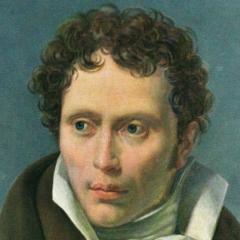
Arthur Schopenhauer
Arthur Schopenhauer

Arthur Schopenhauer was a prominent German philosopher born on February 22, 1788, and died on September 21, 1860. He is one of the most important figures in 19th-century German philosophy and is known for his unique pessimistic philosophical ideas. more

You May Also Like

“This, I think, is the first time I dared myself to stare back at him. Usually, I’d cast a glance and then look away—look away because I didn’t want to swim in the lovely, clear pool of his eyes unless I’d been invited to—and I never waited long enough to know whether I was even wanted there; look away because I was too scared to stare anyone back; look away because I didn’t want to give anything away; look away because I couldn’t acknowledge how much he mattered. Look away because that steely gaze of his always reminded me of how tall he stood and how far below him I ranked. Now, in the silence of the moment, I stared back, not to defy him, or to show I wasn’t shy any longer, but to surrender, to tell him this is who I am, this is who you are, this is what I want, there is nothing but truth between us now, and where there’s truth there are no barriers, no shifty glances, and if nothing comes of this, let it never be said that either of us was unaware of what might happen. I hadn’t a hope left. And maybe I stared back because there wasn’t a thing to lose now. I stared back with the all-knowing, I-dare-you-to-kiss-me gaze of someone who both challenges and flees with one and the same gesture.”

“But all of these hours were strained by fear, as if fear were a brooding specter, or a strange, lost bird trapped in our little town, whose sooty wing flecked every living thing with a shadow that would never wash. I didn’t know what I was afraid of, nor why I worried so much, nor why this thing that could so easily cause panic felt like hope sometimes and, like hope in the darkest moments, brought such joy, unreal joy, joy with a noose tied around it. The thud my heart gave when I saw him unannounced both terrified and thrilled me. I was afraid when he showed up, afraid when he failed to, afraid when he looked at me, more frightened yet when he didn’t. The agony wore me out in the end, and, on scalding afternoons, I’d simply give out and fall asleep on the living room sofa and, though still dreaming, know exactly who was in the room, who had tiptoed in and out, who was standing there, who was looking at me and for how long, who was trying to pick out today’s paper while making the least rustling sound, only to give up and look for tonight’s film listings whether they woke me or not.”

“That’s because you see me as a figure, not a human being. Worse yet: as an old figure. But there were. Mistaken turns, that is. Everyone goes through a period of traviamento—when we take, say, a different turn in life, the other via. Dante himself did. Some recover, some pretend to recover, some never come back, some chicken out before even starting, and some, for fear of taking any turns, find themselves leading the wrong life all life long.”