Quotessence
Home / Quotes / Quote by Ernest Becker

Quote by Ernest Becker

Work

The Denial of Death

This book delves into the psychological mechanisms that drive individuals to repress thoughts of death, examining the various coping strategies and cultural responses to the inevitability of mortality. more
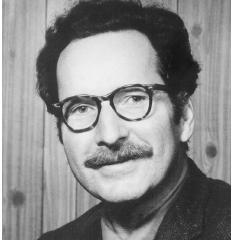
Author

Ernest Becker
Ernest Becker

Ernest Becker was an American anthropologist known for his theories on human motivation and culture. His major work, 'The Denial of Death', explores how humans seek meaning and purpose by denying the fear brought by freedom. more

You May Also Like

“Bah!” Magnus scoffed. “Humans always blame dwarves. A baby goes missing and it was a dwarf that stole it. A princess runs off with a second son of a king and it was a dwarf who lured her to a deep prison. And when they find her with the prince—lo, she was rescued! “A king is stabbed in the back in his own chapel, and a princess’s tower is turned into a death trap,” Royce called back to them. “Friends are betrayed and trapped in a prison—yes, I can see your surprise. Where do they get such ideas?” “Damn his elven ears,” Magnus said.”

“Bọn cún chúng tôi căn bản là thân thiện với loài người. Loài người yêu thương chúng tôi và chúng tôi đáp lại bằng một tình cảm còn sâu sắc hơn. Tình cảm đó không cần phải học. Nó như một thứ bản năng có sẵn trong máu. Thậm chí, tình yêu và lòng tin vô điều kiện đó có thể được coi như một phẩm giá. Nhưng không phải những gì thuộc về loài người đều tốt. Lão Hiếng thuộc về loài người. Nhưng lão không tốt. Vì thế chúng tôi phải trả giá cho sự tin cậy của mình. Khi bạn quá tin cậy hoặc sùng bái một ai, chắc chắn bạn không bao giờ đề phòng, thậm chí nghi ngờ. Và đôi khi bạn chết vì niềm tin ngây thơ của mình.”

“Something else emerges from this discussion about us as human individuals: we're not fixed, stable intellects riding along peering at the world through the lenses of our eyes like the pilots of people-shaped spacecraft. We are affected constantly by what's going on around us. Whether our flexibility is based in neuroplasticity or in less dramatic aspects of the brain, we have to start acknowledging that we are mutable, persuadable and vulnerable to clever distortions, and that very often what we want to be is a matter of constant effort rather than attaining a given state and then forgetting about it. Being human isn't like hanging your hat on a hook and leaving it there, it's like walking in a high wind: you have to keep paying attention. You have to be engaged with the world.”