Quotessence
Home / Authors / Ernest Becker
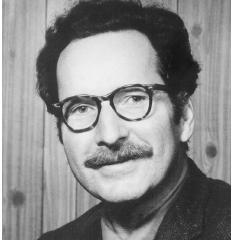
Ernest Becker

Ernest Becker Quotes

Anthropologist

Filter quotes by topic

Famous Ernest Becker Quotes

“Today we are living the grotesque spectacle of the poisoning of the earth by the nineteenth-century hero system of unrestrained material production. This is perhaps the greatest and most pervasive evil to have emerged in all of history, and it may even eventually defeat all of mankind. Still there are no "twisted" people whom we can hold responsible for this.”

“In this view, man is an energy-converting organism who must exert his manipulative powers, who must damage his world in some ways, who must make it uncomfortable for others, etc., by his own nature as an active being. He seeks self-expansion from a very uncertain power base. Even if man hurts others, it is because he is weak and afraid, not because he is confident and cruel. Rousseau summed up this point of view with the idea that only the strong person can be ethical, not the weak one.”

“For ages, when philosophers talked about the core of man they referred to it as his "essence," something fixed in his nature, deep down, some special quality or substance. But nothing like it was ever found; man's peculiarity still remained a dilemma. The reason it was never found, as Erich Fromm put it in an excellent discussion, was that there was no essence, that the essence of man is really his paradoxical nature, the fact that he is half animal and half symbolic.”

“And so we see the paradox that evolution has handed us. If man is the only animal whose consciousness of self gives him an unusual dignity in the animal kingdom, he also pays a tragic price for it. The fact that the child has to identify -first- means that his very first identity is a social product. His habitation of his own body is built from the outside in; not from the inside out. He doesn't unfold into the world, the world unfolds into him. As the child responds to the vocal symbols learned from his object, he often gives the pathetic impression of being a true social puppet, jerked by alien symbols and sounds. What sensitive parent does not have his satisfaction tinged with sadness as the child repeats with such vital earnestness the little symbols that are taught him?”

“a perfect description of the “automatic cultural man”—man as confined by culture, a slave to it, who imagines that he has an identity if he pays his insurance premium, that he has control of his life if he guns his sports car or works his electric toothbrush. Today the inauthentic or immediate men are familiar types, after decades of Marxist and existentialist analysis of man’s slavery to his social system. But in Kierkegaard’s time it must have been a shock to be a modern European city-dweller and be considered a Philistine at the same time. For Kierkegaard “philistinism” was triviality, man lulled by the daily routines of his society, content with the satisfactions that it offers him: in today’s world the car, the shopping center, the two-week summer vacation. Man is protected by the secure and limited alternatives his society offers him, and if he does not look up from his path he can live out his life with a certain dull security: Devoid of imagination, as the Philistine always is, he lives in a certain trivial province of experience as to how things go, what is possible, what usually occurs… . Philistinism tranquilizes itself in the trivial…”

“The masses look to the leaders to give them just the untruth that they need; the leader continues the illusions that triumph over the castration complex and magnifies them into a truly heroic victory. Furthermore, he makes possible a new experience, the expression of forbidden impulses, secret wishes, and fantasies. In group behavior anything goes because the leader okays it. It is like being an omnipotent infant again, encouraged by the parent to indulge oneself plentifully, or like being in psychoanalytic therapy where the analyst doesn't censure you for anything you feel or think. In the group each man seems an omnipotent hero who can give full vent to his appetites under the approving eye of the father. And so we understand the terrifying sadism of group activity.”

“Yet, at the same time, as the Eastern sages also knew, man is a worm and food for worms. This is the paradox: he is out of nature and hopelessly in it; he is dual, up in the stars and yet housed in a heart-pumping, breath-gasping body that once belonged to a fish and still carries the gill-marks to prove it. His body is a material fleshy casing that is alien to him in many ways—the strangest and most repugnant way being that it aches and bleeds and will decay and die. Man is literally split in two: he has an awareness of his own splendid uniqueness in that he sticks out of nature with a towering majesty, and yet he goes back into the ground a few feet in order to blindly and dumbly rot and disappear forever. It is a terrifying dilemma to be in and to have to live with. The lower animals are, of course, spared this painful contradiction, as they lack a symbolic identity and the self-consciousness that goes with it. They merely act and move reflexively as they are driven by their instincts. If they pause at all, it is only a physical pause; inside they are anonymous, and even their faces have no name. They live in a world without time, pulsating, as it were, in a state of dumb being. This is what has made it so simple to shoot down whole herds of buffalo or elephants. The animals don't know that death is happening and continue grazing placidly while others drop alongside them. The knowledge of death is reflective and conceptual, and animals are spared it. They live and they disappear with the same thoughtlessness: a few minutes of fear, a few seconds of anguish, and it is over. But to live a whole lifetime with the fate of death haunting one's dreams and even the most sun-filled days—that's something else.”

“We don’t want to admit that we are fundamentally dishonest about reality, that we do not really control our own lives. We don’t want to admit that we do not stand alone, that we always rely on something that transcends us, some system of ideas and powers in which we are imbedded and which support us. This power is not always obvious. It need not be overtly a god or openly a stronger person, but it can be the power of an all absorbing activity, passion, a dedication to a game, a way of life, that like a comfortable web keeps a person buoyed up and ignorant of himself, of the fact that he does not rest on his own centre. All of us are driven to be supported in a self-forgetful way, ignorance of what energies we really draw on, of the kind of lie we have fashion in order to live securely and serenely.”

“We consult astrology charts like the Babylonians, try to make our children into our own image with a firm hand like the Romans, elbow others to get a breath-quickening glimpse of the queen in her ritual procession, and confess to the priests and attend church. And we wonder why, with all this power capital drawn from so many sources, we are deeply anxious about the meaning of our lives. The reason is plain enough: none of these, nor all of them taken together, represents an integrated world conception into which we fit ourselves with pure belief and trust.”

“Why would a person prefer the accusations of guilt, unworthiness, ineptitude — even dishonor and betrayal — to real possibility? This may not seem to be the choice, but it is: complete self-effacement, surrender to the “others,” disavowal of any personal dignity or freedom — on the one hand; and freedom and independence, movement away from the others, extrication of oneself from the binding links of family and social duties-on the other hand. This is the choice that the depressed person actually faces.”