“Yet, at the same time, as the Eastern sages also knew, man is a worm and food for worms. This is the paradox: he is out of nature and hopelessly in it; he is dual, up in the stars and yet housed in a heart-pumping, breath-gasping body that once belonged to a fish and still carries the gill-marks to prove it. His body is a material fleshy casing that is alien to him in many ways—the strangest and most repugnant way being that it aches and bleeds and will decay and die. Man is literally split in two: he has an awareness of his own splendid uniqueness in that he sticks out of nature with a towering majesty, and yet he goes back into the ground a few feet in order to blindly and dumbly rot and disappear forever. It is a terrifying dilemma to be in and to have to live with. The lower animals are, of course, spared this painful contradiction, as they lack a symbolic identity and the self-consciousness that goes with it. They merely act and move reflexively as they are driven by their instincts. If they pause at all, it is only a physical pause; inside they are anonymous, and even their faces have no name. They live in a world without time, pulsating, as it were, in a state of dumb being. This is what has made it so simple to shoot down whole herds of buffalo or elephants. The animals don't know that death is happening and continue grazing placidly while others drop alongside them. The knowledge of death is reflective and conceptual, and animals are spared it. They live and they disappear with the same thoughtlessness: a few minutes of fear, a few seconds of anguish, and it is over. But to live a whole lifetime with the fate of death haunting one's dreams and even the most sun-filled days—that's something else.”
Quote by Ernest Becker
Book:The Denial of Death
Work
The Denial of Death
This book delves into the psychological mechanisms that drive individuals to repress thoughts of death, examining the various coping strategies and cultural responses to the inevitability of mortality. more
Author
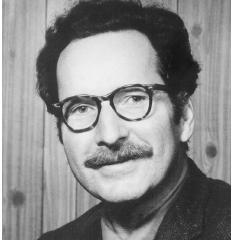
Ernest Becker
Ernest Becker was an American anthropologist known for his theories on human motivation and culture. His major work, 'The Denial of Death', explores how humans seek meaning and purpose by denying the fear brought by freedom. more
You May Also Like
Source: The Secret Thoughts of an Unlikely Convert: An English Professor's Journey Into Christian Faith
“Everyone makes mistakes, but only a person with integrity owns up to them.”
Source: Stasiland: Stories From Behind The Berlin Wall
Source: Puella Magi Madoka Magica, Vol. 2
Source: The Count of Monte Cristo
“The only mistake you can make is not asking for help.”
Source: Intern: A Doctor's Initiation
“You can't lift a relationship up if you keep walking over the other person's mistakes.”
Source: I Suck at Girls