Quotessence
Home / Quotes / Quote by Jack Kerouac

Quote by Jack Kerouac

“I was dealing in outblownness, cut-off-ness, snipped, blownoutness, putoutness, turned-off-ness, nothinghappens-ness, gone-ness, gone-out-ness, the snapped link.”

Quote by Jack Kerouac

Author
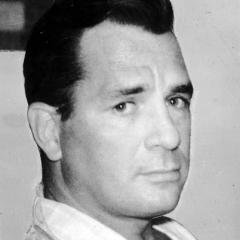
Jack Kerouac
Jack Kerouac

Jack Kerouac, born on March 12, 1922, in Lowell, Massachusetts, was an influential American novelist. Known for his autobiographical novels and beat literature, his most famous work is 'On the Road'. Kerouac's writings had a profound impact on American culture in the 1960s. more

You May Also Like

“The numbers grow as the technology and its accessibility grow. The technology by its very nature encourages more and more passive acquiescence to the graphic depictions. Passivity makes the already credulous consumer more credulous. He comes to the pornography a believer; he goes away from it a missionary.”

“What amounts to a plague of mental illness is now addressed as ‘normal’ rather than as an indication that there is something terrifyingly wrong with our culture. The fact that we no longer understand mental illness as a message – that is, as a nondeclarative communication of an imbalance that requires rectification – not only demonstrates the degree of our emotional illiteracy, but our failure to understand the principle of balance as the axis of all existence.”

“Polarization, of course, is no accident. A divide and conquer game is now underway inside the United States which is calculated to produce instability. It naturally comes on the heels of a societal demoralization (decades in the making). Given current preparations for war in Korea, stage three (crisis) will likely result from a military clash in the Far East. The final stage (normalization), signifies the acceptance by the United States of Russian and Chinese military dominance (formalized by a treaty). This, of course, is only one dimension of the crisis/normalization process. Yet, if things go according to plan, it will be the decisive dimension. Of course, destabilization is carried out by secret agent networks in much the same way as demoralization. It is a process guided by KGB officers and recruited agents. These agents not only operate on the political left. In order to guide the process the KGB has placed agents on the political right – in the guise of rock-solid conservatives. Bezmenov says that recruiting agents on the left is, in fact, not as important as recruiting (or planting) them on the right.”

“The second important principle was 'normality.' The Kremlin has been trying for years to marginalize our movement and drive it underground, to turn us into a modern equivalent of the Soviet dissidents. I have great respect for those dissidents, who were heroes. But in 2012, no one in their right mind wanted to become a heroic dissident-it's dangerous and it's scary. Everyone just wanted to be normal. And that's exactly what we were-normal people with a normal office life. Although we were essentially an organization for revolution, with each person taking great risks, from the outside we looked like a bunch of Moscow hipsters. We had a spacious open plan office and a coffee machine, and we played Secret Santa. WE had Twitter and Instagram accounts. Our staff was young, everyone was friends with everyone else, we went on hikes together and threw parties (though in later years I began to notice a curious tendency for everything that was the most fun to begin after I had gone home). The only way we were different from a fancy start-up was that we were battling Putin. Of course that brought with it predictable downers, like having our office bugged. Although that was disagreeable, it was not particularly scary. Over time, however, the downers became more numerous. the pressure grew year by year, and by 2019 arrests and searches had become part of our daily lives. Our hipster office remained just as hipsterish, only now the riot police sawed through the door with a chain saw, burst in with semiautomatic weapons, made everyone lie on the floor. During one of these raids, fifty members of the staff were relieved of their computers and phones, and all our equipment, documents, and personal belongings were taken. If you managed to hide your phone behind the baseboard molding and your computer in the ceiling tiles-well done. But most often everything was confiscated. The tactic was clear enough: We needed money to replace the equipment, and we would have to ask for donations. The Kremlin was hoping it would gradually become more difficult to raise funds, but after each attack on us we saw a surge in contributions. What the Anti-Corruption Foundation does is obvious from the name. We are hybrids, somewhere between journalists, lawyers, and political activists. We come across a story involving corruption, examine the documents, collect evidence, and publish it. In the first years, we did so as posts on my blog; later, as videos on YouTube. The most important thing we do, then, is spread the story so millions hear about it. The number of independent media outlets was falling rapidly, censorship was everywhere, and no major newspaper, let alone television network, was going to publicize our work. What do you do in a situation like that? You tell the story yourself and ask others to help. Post a link on your blog, write something on social media, send the video to your friends, and if nothing else is helping, print out a leaflet and put it up in elevators. 'This is our mayor: His official salary is around $2,000 a month. and here is his apartment in Miami, which is worth $5 million.' At the end of every investigation I made an appeal: 'Guys we've done our bit. Here's a great, important story, but without your help no one is going to know about it. Send links to your friends. Join your regional group on VKontakte and leave a comment there too. Send it to your grandmother and your parents.' The result was that donors not only gave us money but effectively started working for us themselves and became an important part of our organization.”

“Qualitative and quantitative research with adults and children reporting ritual abuse has found that it occurs alongside other forms of organised abuse, particularly the manufacture of child abuse images (Scott 2001, Snow and Sorenson 1990, Waterman et al. 1993), and hence subsuming such non-ritualistic experiences under the moniker ‘ritual abuse’ is misleading at best and incendiary at worst. Moreover, it is unclear why an abusive group that invokes a religious or metaphysical mandate to abuse children should be considered as largely distinct from an abusive group that invokes a non-religious rationale to do so. The presumption evident amongst some authors writing on ritual abuse that a professed spiritual motivation for abusing children necessarily reflects the offenders actual motivation seems naïve at best, and at worst it risks colluding with the ways in which abusive groups obfuscate responsibility for their actions.”