“In the shop window you have promptly identified the cover with the title you were looking for. Following this visual trail, you have forced your way through the shop past the thick barricade of Books You Haven't Read, which were frowning at you from the tables and shelves, trying to cow you. But you know you must never allow yourself to be awed, that among them there extend for acres and acres the Books You Needn't Read, the Books Made For Purposes Other Than Reading, Books Read Even Before You Open Them Since They Belong To The Category Of Books Read Before Being Written. And thus you pass the outer girdle of ramparts, but then you are attacked by the infantry of the Books That If You Had More Than One Life You Would Certainly Also Read But Unfortunately Your Days Are Numbered. With a rapid maneuver you bypass them and move into the phalanxes of the Books You Mean To Read But There Are Others You Must Read First, the Books Too Expensive Now And You'll Wait Till They're Remaindered, the Books ditto When They Come Out In Paperback, Books You Can Borrow From Somebody, Books That Everybody's Read So It's As If You Had Read Them, Too. Eluding these assaults, you come up beneath the towers of the fortress, where other troops are holding out: the Books Dealing With Something You're Working On At The Moment, the Books You Want To Own So They'll Be Handy Just In Case, the Books You Could Put Aside Maybe To Read This Summer, the Books You Need To Go With Other Books On Your Shelves, the Books That Fill You With Sudden, Inexplicable Curiosity, Not Easily Justified. Now you have been able to reduce the countless embattled troops to an array that is, to be sure, very large but still calculable in a finite number; but this relative relief is then undermined by the ambush of the Books Read Long Ago Which It's Now Time To Reread and the Books You've Always Pretended To Have Read And Now It's Time To Sit Down And Really Read Them. With a zigzag and a dash you shake them off and leap straight into the citadel of the New Books Whose Author or Subject Appeals To You. Even inside this stronghold you can make some breaches in the ranks of the defenders, dividing them into New (for you in general) and New Books By Authors Or On Subjects Completely Unknown (at least to you), and defining the attraction they have for you on the basis of your desires and needs for the new and the not new (for the new you seek in the not new and for the not new you seek in the new). All this means that, having rapidly glanced over the titles of the volumes displayed in the bookshop, you turn toward a stack of If on a winter’s night a traveler fresh off the press, you have grasped a copy, and you have carried it to the cashier so that your right to own it can be established. You cast another bewildered look at the books around you (or, rather: it was the books that looked at you, with the bewildered gaze of dogs who, from their cages in the city pound, see a former companion go off on the leash of his master, come to rescue him), and out you went. You derive a special pleasure from a just-published book, and it isn’t only a book you are taking with you but the novelty as well, which could also merely be that of an object fresh from the factory, the youthful bloom of new books, which lasts until the dust jacket begins to yellow, until a veil of smog settles on the top edge, until the bindings become dog-eared, in the rapid autumn of libraries. No, you hope always to encounter true newness, which having been new once, will continue to be so. Having read the freshly published book, you will take possession of this newness at the first moment, without having to pursue, to chase it. Will it happen this time? You can never tell. Let’s see how it begins.”
Quote by Italo Calvino
Work
If on a winter's night a traveler
This novel is a postmodern work that combines elements of fantasy, science fiction, and metafiction. It follows the story of a reader who becomes immersed in a series of tales, each with its own unique style and ending. The narrative structure is non-linear and often self-referential, challenging the reader's perception of reality and the nature of storytelling. more
Author
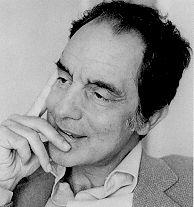
Italo Calvino
Italian writer and journalist, known for his unique narrative style and rich imagination. Calvino is considered one of the greatest writers of the 20th century, whose works have had a profound impact on literature both in Italy and around the world. more
You May Also Like
“I guess books say different things to different people.”
Source: The Reading List
Source: A Lesson in Vengeance
Source: Atomic Habits: An Easy & Proven Way to Build Good Habits & Break Bad Ones
Source: A Lesson in Vengeance
Source: On writing: a memoir of the craft
“The perfect quote is one that's short, profound, and witty.”
Source: What Once Was Mine
Source: Walden: or Life in the Woods
Source: The Diary of a Bookseller