Quotessence
Home / Quotes / Quote by Aleksandr Solzhenitsyn

Quote by Aleksandr Solzhenitsyn

“Легкие деньги – они и не весят ничего, и чутья такого нет, что вот, мол, ты заработал. Правильно старики говорили: за что не доплатишь, того не доносишь.”

Quote by Aleksandr Solzhenitsyn

Author
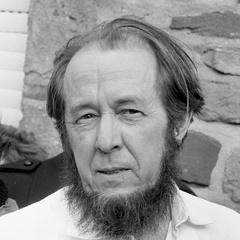
Aleksandr Solzhenitsyn

Aleksandr Solzhenitsyn, a Russian novelist, was born on December 11, 1918, and died on August 3, 2008. He is renowned for his works that profoundly exposed the dark side of the Soviet political system and is considered one of the greatest writers of the 20th century. more

You May Also Like

“Surprising as it may seem today, classical ideas of creating a free market were to be achieved by “socialist” reforms. Their common aim was to protect populations from having to pay prices that included a non-labor rent or financial tax to pay landlords and natural resource owners, monopolists and bondholders. The vested interests railed against public regulation and taxation along these lines. They opposed public ownership or even the taxation of land, natural monopolies and banking. They wanted to collect rent and interest, not make land, banking and infrastructure monopolies public in character.”

“When the volume of debt has grown as large as national income or GDP, and when it bears an interest rate (typically 5%) above the economy’s rate of growth (typically just 1% to 2%), then all the growth in national income is taken by the creditors.”

“In fact, they are not taught in any university departments: the dynamics of debt, and how the pattern of bank lending inflates land prices, or national income accounting and the rising share absorbed by rent extraction in the Finance, Insurance and Real Estate (FIRE) sector. There was only one way to learn how to analyze these topics: to work for banks. Back in the 1960s there was barely a hint that these trends would become a great financial bubble.”

“Popular morality blames victims for going into debt – not only individuals, but also national governments. The trick in this ideological war is to convince debtors to imagine that general prosperity depends on paying bankers and making bondholders rich – a veritable Stockholm Syndrome in which debtors identify with their financial captors.”

“And yet it bewildered him that people truly believed capitalism to be about making things or providing services at a profit. He found it extraordinary how most people disliked speculators but thought of them as peripheral, as harmless bubbles on a steady stream of enterprise. They fail to recognize the very opposite is true, […] that enterprise long ago became a bubble on a whirlpool of speculation. That, in reality, workers, inventors and managers resemble driftwood buffeted hither and thither on a manic torrent of runaway finance.”