Quotessence
Home / Quotes / Quote by Lydia Polgreen

Quote by Lydia Polgreen

“Anything that I'm doing I think I always come at it from an outsider perspective. The first like real front page story that I had for the Times was about how after decades of battles over public restrooms in New York City, effectively chain stores had become the public restroom of choice for New Yorkers, it's sort of a silly little thing, but coming as an outsider, I was like 'Oh this is actually really interesting.'”

Quote by Lydia Polgreen

Author
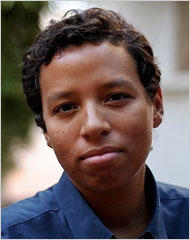
Lydia Polgreen
Lydia Polgreen

Lydia Polgreen (born 1975) is an American journalist and editor, known for her work at The New York Times and as former editor-in-chief of The Huffington Post. She gained prominence for her coverage of Africa, particularly the Darfur conflict in Sudan, earning awards like the George Polk Award. Polgreen has held key roles in international news and digital media, advocating for diversity and innovation in journalism. She currently serves as an editor for The New York Times Opinion section. more

You May Also Like

“Two of the last four executive editors at the New York Times were Johannesburg bureau chiefs at some point, Bill Keller and Joe Lelyveld. This is a very prestigious post and I was like I don't know 28 years old, which at the Times is very young, I had the temerity to put my hand up for that job. I don't think I slept a single night of those six weeks that I spent in Johannesburg. It was an unbelievable experience, and I think I did okay.”

“When I first signed up for a Twitter account - I was to say it was in 2007, people are going to think it's some weird self promotional thing or it's going, but in time I was called upon to like try to persuade other foreign correspondents and journalists to get on Twitter and see the usefulness of it which is kind of ironic. I think the journalists who are leading the digital charge at the Times have, all have that background as a foreign correspondent, which I think is not accidental.”

“Once I came out in college I just have always been out and at work with pretty much everybody. My wife and I both working as journalists, because she's a photographer, and often working together, would have to kind of navigate this weird world. When you're trying to develop sources, when you're trying to you know make personal connections with people, you inevitably want to share things about yourself and that can be really tricky.”

“India's notoriously difficult. It's visa routine is notoriously difficult to get a residency permit and all that stuff, so that threw up all kinds of complicated barriers for us. I remember once having to go meet with the foreign ministry official and say 'You know look I have a real problem here. Is this person really important to you?' And I just thought 'My God.' You know my wife and I have been together since college. You know it's 20 years.”

“I look at technology a lot because I feel like it's something we've got to stop and question, ya know? Right now it's sort of running ahead unabated and I feel like we've got to look at it and say 'Ok, I've gained all of these conveniences, but what did I lose?' And that to me is all part of the same idea of man-made work. We literally worship the things that we've made with our own hands. That's as old as mankind, that problem.”

“I have a perhaps naive point of view informed by my own kind of snowflake-in-the-unique-sense rather than the political sense, personal story. I mean I feel like my experiences are so hard to map onto any kind of generalized identity. For example, I'm a black person, but I come from a very particular black experience which is not unlike the experience of the Barack Obama. I have an African mother and a white father and I feel like I have a different experience of being a black person as a result of that identity than someone who is from the descendants of slaves.”

“I have this very kind of like heterodox idea of what an education is, what underpins identity. I don't think I'm very easily pigeon holed in any of those boxes, so I confront this. I have a staff full of young people who came up in a very different tradition and who feel very fired up about the big identity battles. I listen and I try to navigate them, but I don't find them mapping onto my life in a personal way which is, which is hard.”