Quotessence
Home / Quotes / Quote by Edward Kennedy

Quote by Edward Kennedy

“The stark and tragic images of human suffering in the aftermath of Hurricane Katrina have reminded us yet again that civil rights and equal rights are still the great unfinished business of America. The suffering has been disproportionately borne by the weak, the poor, the elderly and infirm, and largely African-Americans, who were forced by poverty, illness, unequal opportunity to stay behind and bear the brunt of the storm's winds and floods. I believe that kind of disparate impact is morally wrong in this, the richest country in the world.”

Quote by Edward Kennedy

Author
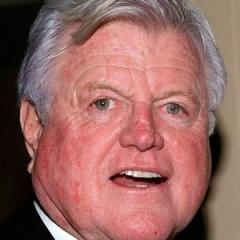
Edward Kennedy
Edward Kennedy

Edward Kennedy, a former United States Senator, was born on February 22, 1932, and passed away on August 25, 2009. He was a significant figure in politics, philanthropy, and social activism. more

You May Also Like

“I believe that the Constitution is not hostile to the idea that national problems can be solved at the national level through the cooperative efforts of the three coequal branches of government, the Congress, the executive and courts. But not every president, not every legislator and not every judge agrees that the federal government has the power to address and to try to remedy the twin national problems of poverty and access to equal opportunity.”

“Plenty of people within the Moslem world are not engaged in a clash with te West and don't want to do so; and none of the terrorist acts was an attack by the Moslem world on the West. They were attacks by particular groups of Moslems on particular Western individuals or nations. If we allow ourselves to de driven to thinking of every Moslem as an enemy or every Westerner as a friend, for that matter in these circumstances, we'll have no basis for moving forward.”

“I favor a form of cosmopolitanism that takes nations very seriously, particularly because of the role of national law in sustaining or, unfortunately, undermining human rights. Some cosmopolitans take the metaphor of global citizenship - the etymology of the word, after all, just comes from a Greek phrase meaning citizen of the world - to rule out taking national citizenship seriously. I think that's a big mistake. Why can't I be loyal to America and to humanity? After all, I can be loyal to America and to New York city!”

“We can't literally talk with everybody else on the planet or even with representatives of every group. But we can be in favor of the respectful exchange of ideas in ways that don't presuppose that all the right answers are on our own side. Still, we should all have moral bottom lines. Once genocide or torture begins the priority shifts from understanding to stopping it. One hope I have for the global conversation as instantiated in human rights treaties is that we are slowly coming to consensus on certain moral baselines.”

“There are many agreements across the so-called "world religions," at a certain level of abstraction. But when it comes to applying them in concrete situations they may lead to incompatible decisions. As an example, some people think that Christian ideas of sexual modesty suggest that homosexuals should be locked up, some people think that they mean that the churches should recongize gay marriages. But everyone believes in sexual modesty. I think there are universal moral truths, whether or not everyone accepts them. Here's one very low level but important one: it's very bad to torture people.”

“When philosophers talk about reason they often have in mind Having been in the business of philosophy more than half my life, I have learned that reason doesn't change many minds. But there's a more ordinary sense of resonableness, which involves not just logic but a sensitivity to other peoples real concerns, a desire to understand, even when you don't agree. Many people are reasonable in this way.I'm willing to think that the world will be made better by the conversations of reasonable people, even if there are unreasonable people and people who don't want to converse as well.”