Quotessence
Home / Quotes / Quote by Kent Haruf

Quote by Kent Haruf

“After finishing the first draft, I work for as long as it takes (for two or three weeks, most often) to rework that first draft on a computer. Usually that involves expansion: filling in and adding to, but trying not to lose the spontaneous, direct sound. I use that first draft as a touchstone to make sure everything else in that section has the same sound, the same tone and impression of spontaneity.”

Quote by Kent Haruf

Author
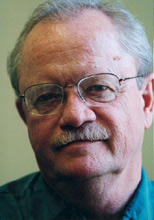
Kent Haruf
Kent Haruf

Kent Haruf was an American novelist known for his vivid portrayal of rural life in the American Midwest. His works delve into the complexities of human nature and the diversity of society, earning him a dedicated following among readers. more

You May Also Like

“In the most basic way, writers are defined not by the stories they tell, or their politics, or their gender, or their race, but by the words they use. Writing begins with language, and it is in that initial choosing, as one sifts through the wayward lushness of our wonderful mongrel English, that choice of vocabulary and grammar and tone, the selection on the palette, that determines who's sitting at that desk. Language creates the writer's attitude toward the particular story he's decided to tell.”

“Acutely aware of the poverty of my means, language became obstacle. At every page I thought, 'That's not it.' So I began again with other verbs and other images. No, that wasn't it either. But what exactly was that it I was searching for? It must have been all that eludes us, hidden behind a veil so as not to be stolen, usurped and trivialized. Words seemed weak and pale.”

“There are people who have never studied writing who are capable of being writers. I know this because I am an example. I was a part-time registered nurse, a wife, and a mother when I began publishing. I'd taken no classes, had no experience, no knowledge of the publishing world, no agent, no contacts ... Take the risk to let all that is in you, out. Escape into the open.”

“While there is no quick fix for instant, pain-free creativity, creative recovery (or discovery) is a teachable, trackable spiritual process. Each of us is complex and highly individual, yet there are common recognizable denominators to the creative recovery process.”

“This is the practice school of writing. Like running, the more you do it, the better you get at it. Some days you don't want to run and you resist every step of the three miles, but you do it anyway. You practice whether you want to or not. You don't wait around for inspiration and a deep desire to run ... That's how writing is too ... One of the main aims in writing practice is to learn to trust your own mind and body; to grow patient and nonaggressive.”

“Here's the first major lesson: Writing is not an activity. It's not something you sit down at the keyboard, and just start doing. That's called 'typing.' Typing is an activity ... Writing is a process. And if you start thinking of it as a process, life gets so much easier.”