“Menaced by collectivist trends, we must seek revival of our strength in the spiritual foundations which are the bedrock of our republic. Democracy is the outgrowth of the religious conviction of the sacredness of every human life. On the religious side, its highest embodiment is the Bible; on the political side, the Constitution.”
Quote by Herbert Hoover
Author
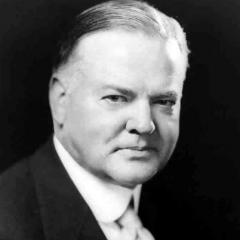
Herbert Hoover
Herbert Hoover, the 31st President of the United States, was born on August 10, 1874, and died on October 20, 1964. A distinguished engineer, businessman, and philanthropist, he served as the United States Secretary of Commerce and as the Director of the United States Food Administration during World War I. As President, Hoover implemented a series of policies aimed at alleviating the Great Depression, but his approach was widely criticized. more
You May Also Like
Source: The Labyrinth of Solitude: And the Other Mexico ; Return to the Labyrinth of Solitude ; Mexico and the United States ; The Philanthropic Ogre
Source: The Person of Christ
Source: Christologia Or, A Declaration of the Glorious Mystery of the Person of Christ, God and Man: With the Infinite Wisdom, Love and Power of God in the Contrivance and Constitution Thereof ...
“Being single is about celebrating and appreciating your own space that you're in.”
Source: Daily Devotion - 365 Days With Jesus
Source: The Complete Works of C. H. Spurgeon, Volume 44: Sermons 2549-2602
“Nothing fine and noble will ever perish from the earth as long as there are hearts to remember.”