Quotessence
Home / Quotes / Quote by Camille Paglia

Quote by Camille Paglia

“I want young women when they're 14 to start thinking about what they want over the course of their lives. I think it's criminal - child abuse - that they're not told to do this [in school]. Right now it's just sex education and putting condoms on bananas. Girls should be asked to think about what they want in their lives when they're 50, 60 and 70.”

Quote by Camille Paglia

Author
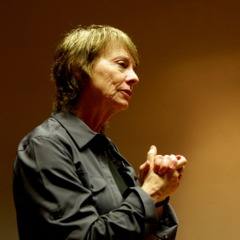
Camille Paglia
Camille Paglia

Camille Paglia is an American academic, cultural critic, and author known for her controversial views on a variety of cultural and social issues. Born on April 2, 1947, she has taught at several universities and has written numerous books and articles on topics such as art, literature, and gender studies. more

You May Also Like

“I'm a better musician now, and I rarely practice because age has taught me the value of economy. And I think I'm a better writer now because I don't waste as much time, dilly-dallying and sassafrassin' and sloop and sloppin' and frying eggs. When you start writing, half the time you're just saying howdy to the page. My process now is a little more lean and muscular. I don't waste a lot of time. When I had kids, I learned how much time I had before, and how much time you actually need to do something. If you don't have time, you'll just do it and get it done.”

“Music and writing do fold together in the sense that you have to have a certain level of skill in order to execute your ideas and you need a medium. The idea of improvisation is one that many writers fall into, and I improvise a great deal when I'm writing, but there's a structural framework that I'm working around, and that takes more time than the actual writing. Once the characters get to yapping and talking, they'll move from one room to the next, and I just have to make sure that the house is built. That's really hard, that's the kind of thing that sits with you all day long.”

“Much of the way books get classified has to do with marketing decisions. I think it's more useful to think of literary books and sci-fi/fantasy books as existing on a continuum. To oppose them, to suggest that one category excludes the other, always feels bogus to me. The great Leonard Michaels line is "I wanted proximity to darkness, strangeness"? That's what I'd say I want from a book, regardless of where it falls on the fantastical spectrum - that suspense connected to a particular human character, rather than just some mechanized plot.”

“People have been trying to do kind of natural language processing with computers for decades and there has only been sort of slow progress in that in general. It turned out the problem we had to solve is sort of the reverse of the problem people usually have to solve. People usually have to solve the problem of you're given you know thousands, millions of pages of text, go have the computer understand this.”

“What I realized is that if we're going to be able to have a theory about what happens in, for example, nature there has to ultimately be some rule by which nature operates. But the issue is does that rule have to correspond to something like a mathematical equation, something that we have sort of created in our human mathematics? And what I realized is that now with our understanding of computation and computer programs and so on, there is actually a much bigger universe of possible rules to describe the natural world than just the mathematical equation kinds of things.”