Quotessence
Home / Quotes / Quote by Eoin Colfer

Quote by Eoin Colfer

“There is no such thing as a happy ending. Every culture has a maxim that makes this point, while nowhere in the Universe is there a single gravestone that reads 'He Loved Everything About His Life, Especially the Dying Bit at the End'.”

Quote by Eoin Colfer

Work

And Another Thing...

The book is a satirical take on the science fiction genre, blending humor with philosophical musings. It follows the adventures of a fictional character navigating a complex and surreal world, questioning the very fabric of existence. more

Author

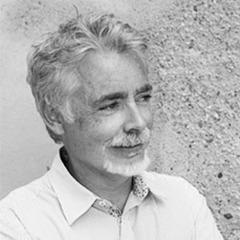
Eoin Colfer
Eoin Colfer

Eoin Colfer is an Irish author best known for his children's literature. He gained international recognition as one of the authors of the 'Harry Potter and the Deathly Hallows' continuation series. Born on May 14, 1965, Colfer's works are celebrated for their humor and imagination, appealing to young readers. more

You May Also Like

“Most craft give a nod, however brief and unfriendly, towards beauty. Vogon ships did not nod towards beauty. They pulled on ski masks and mugged beauty in a dark alley They spat in the eye of beauty and bludgeoned their wait through the notions of aesthetics and aerodynamics. Vogon cruisers did not so much travel through space as defile it and toss it aside.”

“It is tempting when looking at the life of anyone who has committed suicide to read into the decision to die a vastly complex web of reasons; and, of course, such complexity is warranted. No one illness or event causes suicide; and certainly no one knows all, or perhaps even most, of the motivations behind the killing of the self. But psychopathology is almost always there, and its deadliness is fierce. Love, success, and friendship are not always enough to counter the pain and destructiveness of severe mental illness”

“When people are suicidal, their thinking is paralyzed, their options appear spare or nonexistent, their mood is despairing, and hopelessness permeates their entire mental domain. The future cannot be separated from the present, and the present is painful beyond solace. ‘This is my last experiment,’ wrote a young chemist in his suicide note. ‘If there is any eternal torment worse than mine I’ll have to be shown.”

“Looking at suicide—the sheer numbers, the pain leading up to it, and the suffering left behind—is harrowing. For every moment of exuberance in the science, or in the success of governments, there is a matching and terrible reality of the deaths themselves: the young deaths, the violent deaths, the unnecessary deaths”