“Man cannot live in the midst of plenty.”
Quote by Thomas Malthus
Work
An Essay on the Principle of Population: Illustrated
Written by Thomas Robert Malthus, this influential essay explores the concept of population growth and its implications on society, economy, and natural resources. It discusses the idea of a finite carrying capacity of the Earth and the potential for overpopulation to lead to scarcity and hardship. more
Author
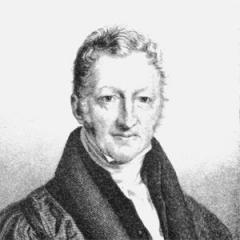
Thomas Malthus
Thomas Malthus, a British economist and demographer, was born on February 14, 1766, in Surrey, England, and died on December 23, 1834. Malthus is known for his theory of population, which posits that population growth will outstrip food supply, leading to poverty and suffering. more
You May Also Like
“Evil exists in the world not to create despair but activity.”
Source: An Essay on the Principle of Population: Illustrated
Source: An Essay on the Principle of Population and Other Writings
“To minds of a certain cast there is nothing so captivating as simplification and generalization.”
Source: An Essay on the Principle of Population and Other Writings
Source: An Essay on the Principle of Population, Or, a View of Its Past and Present Effects on Human Happiness: With an Inquiry Into Our Prospects Respecting the Future Removal Or Mitigation of the Evils which it Occasions
Source: An Essay on the Principle of Population, Or, a View of Its Past and Present Effects on Human Happiness: With an Inquiry Into Our Prospects Respecting the Future Removal Or Mitigation of the Evils which it Occasions
“We believe 'Peter Rabbit' because Beatrix Potter believes it. You have to.”
Source: An Essay on the Principle of Population and Other Writings
Source: The Works of Thomas Robert Malthus: Principles of political economy. Part 2