Quotessence
Home / Quotes / Quote by Jonathan Safran Foer

Quote by Jonathan Safran Foer

Author

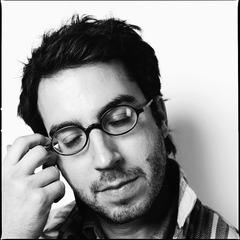
Jonathan Safran Foer

Jonathan Safran Foer is an American writer known for his unique narrative style and profound insights into social issues. His works often blend historical, literary, and philosophical elements, exploring themes such as family, memory, and identity. more

You May Also Like

“He gazes through sunlight's buttresses, back down the refectory at the others, wallowing in their plenitude of bananas, thick palatals of their hunger lost somewhere in the stretch of morning between them and himself. A hundred miles of it, so suddenly. Solitude, even among the meshes of this war, can when it wishes so take him by the blind gut and touch, as now, possessively. Pirate's again some other side of a window, watching strangers eat breakfast.”

“We were kissing. I thought: This is good. I thought: I am not bad at this kissing. Not bad at all. I thought: I am clearly the greatest kisser in the history of the universe. Suddenly she laughed and pulled away from me. She wiggled a hand out of her sleeping bag and wiped her face. "You slobbered on my nose," she said, and laughed”

“What I like doing best is Nothing." "How do you do Nothing," asked Pooh after he had wondered for a long time. "Well, it's when people call out at you just as you're going off to do it, 'What are you going to do, Christopher Robin?' and you say, 'Oh, Nothing,' and then you go and do it. It means just going along, listening to all the things you can't hear, and not bothering." "Oh!" said Pooh.”

“I shared a vagrant optimism that some of us were making real progress, that we had taken an honest road, and that the best of us would inevitably make it over the top. At the same time, I felt that the life we were leading was a lost cause, that we were all actor, kidding ourselves on a senseless odyssey. It was the tension between those two poles - a restless idealism on one hand and a sense of impending doom on the other - that kept me going.”

“The yearning to know what cannot be known, to comprehend the incomprehensible, to touch and taste the unapproachable, arises from the image of God in the nature of man. Deep calleth unto deep, and though polluted and landlocked by the mighty disaster theologians call the Fall, the soul senses its origin and longs to return to its source.”