Quotessence
Home / Quotes / Quote by John Dryden

Quote by John Dryden

“Is it not evident, in these last hundred years (when the Study of Philosophy has been the business of all the Virtuosi in Christendome) that almost a new Nature has been revealed to us? that more errours of the School have been detected, more useful Experiments in Philosophy have been made, more Noble Secrets in Opticks, Medicine, Anatomy, Astronomy, discover'd, than in all those credulous and doting Ages from Aristotle to us? So true it is that nothing spreads more fast than Science, when rightly and generally cultivated.”

Quote by John Dryden

Work

Delphi Complete Works of John Dryden (Illustrated)

The Delphi Complete Works of John Dryden (Illustrated) is a comprehensive compilation of Dryden's literary contributions, featuring his poetry, plays, and other writings. The illustrated edition aims to provide readers with a visually appealing and accessible experience of Dryden's work, showcasing his significant role in the development of English literature. more

Author
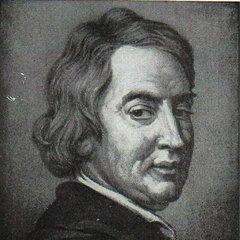
John Dryden
John Dryden

John Dryden, born on August 9, 1631, and died on May 12, 1700, was a prominent English poet and dramatist of the 17th century. His works have had a profound impact on English literature, particularly in the field of drama, and he is considered one of the founders of English drama. more

You May Also Like

“This is all very fine, but it won't do-Anatomy-botany-Nonsense! Sir, I know an old woman in Covent Garden, who understands botany better, and as for anatomy, my butcher can dissect a joint full as well; no, young man, all that is stuff; you must go to the bedside, it is there alone you can learn disease! Comment to Hans Sloane on Robert Boyle's letter of introduction describing Sloane as a 'ripe scholar, a good botanist, a skilful anatomist'.”

“... our "Physick" and "Anatomy" have embraced such infinite varieties of being, have laid open such new worlds in time and space, have grappled, not unsuccessfully, with such complex problems, that the eyes of Vesalius and of Harvey might be dazzled by the sight of the tree that has grown out of their grain of mustard seed.”

“"The Universe repeats itself, with the possible exception of history." Of all earthly studies history is the only one that does not repeat itself. ... Astronomy repeats itself; botany repeats itself; trigonometry repeats itself; mechanics repeats itself; compound long division repeats itself. Every sum if worked out in the same way at any time will bring out the same answer. ... A great many moderns say that history is a science; if so it occupies a solitary and splendid elevation among the sciences; it is the only science the conclusions of which are always wrong.”

“After the birth of printing books became widespread. Hence everyone throughout Europe devoted himself to the study of literature... Every year, especially since 1563, the number of writings published in every field is greater than all those produced in the past thousand years. Through them there has today been created a new theology and a new jurisprudence; the Paracelsians have created medicine anew and the Copernicans have created astronomy anew. I really believe that at last the world is alive, indeed seething, and that the stimuli of these remarkable conjunctions did not act in vain.”

“All Science is necessarily prophetic, so truly so, that the power of prophecy is the test, the infallible criterion, by which any presumed Science is ascertained to be actually & verily science. The Ptolemaic Astronomy was barely able to prognosticate a lunar eclipse; with Kepler and Newton came Science and Prophecy.”

“Astronomy is a cold, desert science, with all its pompous figures,-depends a little too much on the glass-grinder, too little on the mind. 'T is of no use to show us more planets and systems. We know already what matter is, and more or less of it does not signify.”