Source: Lucretius his six books of epicurean philosophy and Manilius his five books containing a system of the ancient astronomy and astrology together with ... verse with notes by Mr. Tho. Creech
Filter quotes by topic
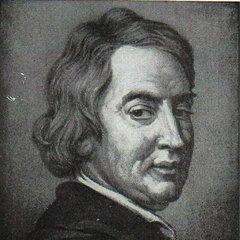
Famous John Dryden Quotes
Source: Aureng-Zebe
Source: Oedipus: A Tragedy
“Great wits are to madness near allied And thin partitions do their bounds divide.”
Source: Absalom and Achitophel
Source: Dryden
“Errors, like straws, upon the surface flow; He who would search for pearls, must dive below.”
Source: All for Love
Source: Absalom and Achitophel
“For you may palm upon us new for old: All, as they say, that glitters, is not gold.”
Source: The Hind And The Panther
“But O! what art can teach, What human voice can reach, The sacred organ's praise?”
Source: The Spanish Fryar, Or, The Double Discovery: A Tragi-comedy
“Two if's scarce make one possibility.”
Source: Almanzor and Almahide, or the Conquest of Granada
Source: Dryden
Source: Absalom and Achitophel
Source: The works of John Dryden: now first collected in eighteen volumes. Illustrated with notes, historical, critical, and explanatory, and a life of the author
“The greater part performed achieves the less.”
Source: Poetical works
“To draw true beauty shows a master's hand.”
Source: Poetical works
“All authors to their own defects are blind.”
Source: The works of John Dryden: now first collected in eighteen volumes. Illustrated with notes, historical, critical, and explanatory, and a life of the author
“Ill writers are usually the sharpest censors.”
Source: The Poetical Works of John Dryden, Containing the Original Poems, Tales, and Translations
Source: Dryden: Selected Poems
“Dreams are but interludes, which fancy makes; When monarch reason sleeps, this mimic wakes.”
Source: The Poetical Works of John Dryden
“Maintain your post: That's all the fame you need; For 'tis impossible you should proceed.”
Source: The Poetical Works of John Dryden
“To take up half on trust, and half to try, Name it not faith but bungling bigotry.”
Source: Dryden: Selected Poems
“Tis Fate that flings the dice, And as she flings Of kings makes peasants, And of peasants kings.”
Source: The Duke of Guise. A tragedy. Acted by their Majesties Servants. Written by Mr. Dryden, and Mr. Lee
“Ill fortune seldom comes alone.”
Source: Poetical works
Source: Delphi Complete Works of John Dryden (Illustrated)
“My hands are guilty, but my heart is free.”
Source: Selections from the poetry of Dryden, including his plays and translations. [The editor's preface signed: C. B., i.e. Charles Bathurst.]
“Thoughts cannot form themselves in words so horrid As can express my guilt.”
Source: British Theatre: Isabella, or, The fatal marriage
“Who climbs the grammar-tree, distinctly knows Where noun, and verb, and participle grows.”
Source: The Poetical Works of John Dryden: Containing Original Poems, Tales and Translations
“Murder may pass unpunishd for a time, But tardy justice will oertake the crime.”
“Ill news is wing'd with fate, and flies apace.”
Source: The Poetical Works of John Dryden. With Illustrations by John Franklin
“A narrow mind begets obstinacy; we do not easily believe what we cannot see.”
“At home the hateful names of parties cease, And factious souls are wearied into peace.”
Source: Dryden: Selected Poems
“Satire among the Romans, but not among the Greeks, was a bitter invective poem.”
“Satire is a kind of poetry in which human vices are reprehended.”
Source: The Poetical Works of John Dryden
Source: Dryden: Selected Poems
“Revealed religion first informed thy sight, and reason saw not till faith sprung to light.”
Source: Dryden: Selected Poems