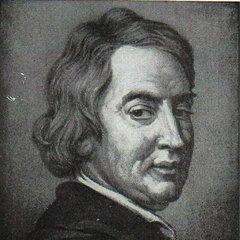
“Shakespeare was the Homer, or father of our dramatic poets;Jonson was theVirgil, the pattern of elaborate writing; I admire him, but I love Shakespeare.”
“Desire of power, on earth a vicious weed, Yet, sprung from high, is of celestial seed: In God 'tisglory; and when men aspire, 'Tis but a spark too much of heavenly fire.”
“Music, Music for a while Shall all your cares beguile. Alexander's Feast”
“It is almost impossible to translate verbally and well at the same time; for the Latin (a most severe and compendious language) often expresses that in one word which either the barbarity or the narrowness of modern tongues cannot supply in more. ...But since every language is so full of its own proprieties that what is beautiful in one is often barbarous, nay, sometimes nonsense, in another, it would be unreasonable to limit a translator to the narrow compass of his author's words; it is enough if he choose out some expression which does not vitiate the sense.”
“I learn to pity woes so like my own.”
Source: Selections from the poetry of Dryden, including his plays and translations. [The editor's preface signed: C. B., i.e. Charles Bathurst.]
“The trumpet's loud clangor Excites us to arms.”
Source: The Poetical Works of John Dryden
“And he, who servilely creeps after sense, Is safe, but ne'er will reach an excellence.”
“None would live past years again, Yet all hope pleasure in what yet remain; And, from the dregs of life, think to receive, What the first sprightly running could not give.”
“From plots and treasons Heaven preserve my years, But save me most from my petitioners. Unsatiate as the barren womb or grave; God cannot grant so much as they can crave.”
“Farewell, too little, and too lately known, Whom I began to think and call my own.”
“How easy it is to call rogue and villain, and that wittily! But how hard to make a man appear a fool, a blockhead, or a knave, without using any of those opprobrious terms! Tosparethegrossness ofthenames, and to dothe thing yet moreseverely, isto drawa full face, and tomake the nose and cheeks stand out, and yet not to employ any depth of shadowing.”
“not judging truth to be in nature better than falsehood, but setting a value upon both according to interest.”
Source: Plutarch's Lives
“Railing in other men may be a crime, But ought to pass for mere instinct in him: Instinct he follows and no further knows, For to write verse with him is to transprose.”
Source: Poetical Works: With Life, Critical Dissertation and Explanatory Notes
“I saw myself the lambent easy light Gild the brown horror, and dispel the night.”
Source: Dryden: Selected Poems
“Sure there's contagion in the tears of friends.”
“Much malice mingled with a little wit Perhaps may censure this mysterious writ.”
“A man may be capable, as Jack Ketch's wife said of his servant, of a plain piece of work, a bare hanging; but to makea malefactordiesweetly was only belonging toher husband.”
“The soft complaining flute, In dying notes, discovers The woes of hopeless lovers.”
Source: The Works of John Dryden in Verse and Prose
“And that one hunting, which the Devil design'd For one fair female, lost him half the kind.”
Source: Selections from the poetry of Dryden, including his plays and translations. [The editor's preface signed: C. B., i.e. Charles Bathurst.]
“For every inch that is not fool, is rogue.”
Source: Poetical works
“The unhappy man, who once has trail'd a pen, Lives not to please himself, but other men; Is always drudging, wastes his life and blood, Yet only eats and drinks what you think good.”
Source: The poetical works of John Dryden, esq: containing original poems, tales, and translations, with notes
“With odorous oil thy head and hair are sleek; And then thou kemb'st the tuzzes on thy cheek: Of these, my barbers take a costly care.”
Source: The Works of John Dryden: In Verse and Prose, with a Life
“They, who would combat general authority with particular opinion, must first establish themselves a reputation of understanding better than other men.”
“I am reading Jonson's verses to the memory of Shakespeare; an insolent, sparing, and invidious panegyric.”
Source: The Works of the English Poets. With Prefaces, Biographical and Critical, by Samuel Johnson
“O freedom, first delight of human kind!”
Source: The Poetical Works of John Dryden: Containing Original Poems, Tales and Translations
“Criticism is now become mere hangman's work, and meddles only with the faults of authors ; nay, the critic is disgusted less with their absurdities than excellence ; and you cannot displease him more than in leaving him little room for his malice.”
Source: The Works of John Dryden: In Verse and Prose, with a Life
“The Fates but only spin the coarser clue; The finest of the wool is left for you.”
Source: The works of John Dryden: now first collected in eighteen volumes. Illustrated with notes, historical, critical, and explanatory, and a life of the author
“While I am compassed round With mirth, my soul lies hid in shades of grief, Whence, like the bird of night, with half-shut eyes, She peeps, and sickens at the sight of day.”
Source: The Comedies, Tragedies, and Operas....: Now First Collected Together, and Corrected from the Roginals
“Secret guilt by silence is betrayed.”
Source: The works of John Dryden: now first collected in eighteen volumes. Illustrated with notes, historical, critical, and explanatory, and a life of the author
“Every language is so full of its own proprieties that what is beautiful in one is often barbarous, nay, sometimes nonsense, in another.”
Source: The Major Works
“Ah, how sweet it is to love! Ah, how gay is young Desire! And what pleasing pains we prove When we first approach Love's fire!”
Source: Sir Martin Mar-All. The tempest. An evening's love. Tyrannic love
“By viewing nature, nature's handmaid art, Makes mighty things from small beginnings grow: Thus fishes first to shipping did impart, Their tail the rudder, and their head the prow.”
“To die for faction is a common evil, But to be hanged for nonsense is the devil.”
Source: The works of John Dryden: now first collected in eighteen volumes. Illustrated with notes, historical, critical, and explanatory, and a life of the author
“A satirical poet is the check of the laymen on bad priests.”
Source: The Works of John Dryden, Vol.2: Top English Literature
“War seldom enters but where wealth allures.”
Source: The Poetical Works of John Dryden
“A man is to be cheated into passion, but to be reasoned into truth.”
Source: The Poetical Works of John Dryden. With Illustrations by John Franklin
“My right eye itches, some good luck is near.”
Source: The Works of John Dryden, Volume II: Poems, 1681-1684
“I am resolved to grow fat and look young till forty, and then slip out of the world with the first wrinkle and the reputation of five-and-twenty.”
“My whole life Has been a golden dream of love and friendship.”
“For lawful power is still superior found, When long driven back, at length it stands the ground.”
“Every age has a kind of universal genius, which inclines those that live in it to some particular studies.”
“Virgil and Horace [were] the severest writers of the severest age.”
“For what can power give more than food and drink, To live at ease, and not be bound to think?”
Source: The Poetical Works of John Dryden
“Moderate sorrow Fits vulgar love, and for a vulgar man: But I have lov'd with such transcendent passion, I soar'd, at first, quite out of reason's view, And now am lost above it.”
“All the learn'd are cowards by profession.”
“I have a soul that like an ample shield Can take in all, and verge enough for more.”
Source: Don Sebastian, King of Portugal, etc
“The World to Bacon does not only owe it's present knowledge, but its future too.”
Source: The Works of John Dryden in Verse and Prose
“Virtue in distress, and vice in triumph make atheists of mankind.”
Source: The Works of John Dryden, Volume XVI: Plays: King Arthur, Cleomenes, Love Triumphant, and The Secular Masque and Other Contributions to The Pilgrim
“Even kings but play; and when their part is done, some other, worse or better, mounts the throne.”
Source: The Poetical Works of John Dryden
“When we view elevated ideas of Nature, the result of that view is admiration, which is always the cause of pleasure.”
Source: The works of John Dryden: now first collected in eighteen volumes. Illustrated with notes, historical, critical, and explanatory, and a life of the author