“Angels never attack, as infernal spirits do. Angels only ward off and defend.”
Quote by Emanuel Swedenborg
Author
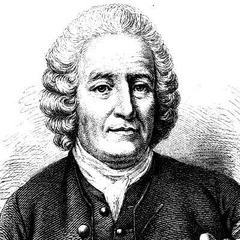
Emanuel Swedenborg
Emanuel Swedenborg was a Swedish scientist, philosopher, and theologian. Born on January 29, 1688, and died on March 29, 1772. The surname 'Swedenborg' is derived from the Swedish word 'borg', meaning 'castle', hence his name can be translated as 'Manuel of the Castle'. Swedenborg made significant contributions to science, particularly in the fields of chemistry, mineralogy, and electricity. His ideas had a profound impact on later science and philosophy. more
You May Also Like
Source: Lincoln Speeches
Source: Abraham Lincoln: Speeches & Writings Part 1: 1832-1858: Library of America #45
Source: The collected works of Abraham Lincoln
Source: CIVIL WAR – Complete History of the War, Documents, Memoirs & Biographies of the Lead Commanders: Memoirs of Ulysses S. Grant & William T. Sherman, Biographies of Abraham Lincoln, Jefferson Davis & Robert E. Lee, The Emancipation Proclamation, Gettysburg Address, Presidential Orders & Actions
Source: The Complete Papers And Writings Of Abraham Lincoln (Biographically Annotated Edition)
Source: Abraham Lincoln: Speeches & Writings Part 2: 1859-1865: Library of America #46