Quotessence
Home / Quotes / Quote by Eric Drooker

Quote by Eric Drooker

“Art makes people do a double take and then, if they're looking at the picture, maybe they'll read the text under it that says, "Come to Union Square, For Anti-War Meeting Friday." I've been operating that way ever since - that art is a means to an end rather than simply an end in itself. In art school we're always taught that art is an end in itself - art for art's sake, expressing yourself, and that that's enough.”

Quote by Eric Drooker

Author
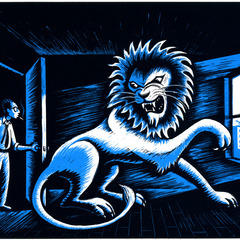
Eric Drooker
Eric Drooker

Eric Drooker is an American painter known for his unique artistic style and rich imagination. His works blend elements of surrealism and street art, often addressing social and political issues. Born in 1958, Drooker began his artistic career in New York City, where he grew up with a passion for art. more

You May Also Like

“What's that Regina Spektor song? Museums are like mausoleums. Having your work in a museum is something we as artists aspire to, but I don't think that's something we need to worry about while we're alive. Typically your work will end up in a museum after you're dead. And maybe that's the function of a museum. It's an archive of your work after you're dead. But while we're alive, I like to see it in places where it's connected to day-to-day life and making a difference.”

“We had collaborated with Allen Ginsberg on one of his last projects just before he died in the spring of '97, a book called Illuminated Poems - it was Allen's poems and songs and I illustrated them. Or, I illuminated them with paintings and drawings that bounced off of them. You want the picture to relate to the text without it slavishly regurgitating it or merely illustrating it, because that's redundant. You want to show another angle of what the text is saying.”

“We were just trying to make the films that we could get made, and to push the envelope. We didn't realize how far we had pushed the envelope. That all came later. That all came from books and articles about the golden age of the '70s. Believe me, to a lot of us, it was no golden age. The studio heads were very powerful then. They would fire guys right and left. They would look at your dailies and tell you what was wrong with them... a lot of stuff that doesn't go on today. Young filmmakers who are successful today, they don't often have that to put up with.”