Quotessence
Home / Quotes / Quote by Samuel Johnson

Quote by Samuel Johnson

“He that would travel for the entertainment of others, should remember that the great object of remark is human life. Every Nation has something peculiar in its Manufactures, its Works of Genius, its Medicines, its Agriculture, its Customs, and its Policy. He only is a useful Traveller, who brings home something by which his country may be benefited; who procures some supply of Want, or some mitigation of Evil, which may enable his readers to compare their condition with that of others, to improve it whenever it is worse, and whenever it is better to enjoy it.”

Quote by Samuel Johnson

Author
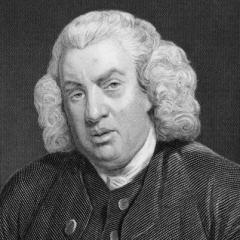
Samuel Johnson
Samuel Johnson

Samuel Johnson was an English writer, poet, and lexicographer, renowned for his comprehensive English dictionary, 'A Dictionary of the English Language', published in 1755. His distinctive writing style and wit have cemented his place as a significant figure in the history of English literature. more

You May Also Like

“It is commonly supposed that the uniformity of a studious life affords no matter for narration: but the truth is, that of the most studious life a great part passes without study. An author partakes of the common condition of humanity; he is born and married like another man; he has hopes and fears, expectations and disappointments, griefs and joys, and friends and enemies, like a courtier or a statesman; nor can I conceive why his affairs shuld not excite curiosity as much as the whisper of a drawing-room, or the factions of a camp.”

“Freedom of expression is the well-spring of our civilization... The history of civilization is in considerable measure the displacement of error which once held sway as official truth by beliefs which in turn have yielded to other truths. Therefore the liberty of man to search for truth ought not to be fettered, no matter what orthodoxies he may challenge.”

“The constitutional right of free speech has been declared to be the same in peace and war. In peace, too, men may differ widely as to what loyalty to our country demands, and an intolerant majority, swayed by passion or by fear, may be prone in the future, as it has been in the past, to stamp as disloyal opinions with which it disagrees.”