“The alternative to thinking in evolutionary terms is not to think at all.”
Quote by Peter Medawar
Work
The Life Science: Current Ideas of Biology
This book provides an in-depth exploration of contemporary ideas and advancements in the biological sciences, covering a wide range of topics within the discipline. more
Author
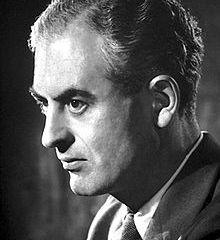
Peter Medawar
Peter Medawar was a British biologist and immunologist recognized for his work in transplantation immunology. He was awarded the Nobel Prize in Physiology or Medicine in 1960 for his discovery of immunological tolerance. more
You May Also Like
Source: The Strange Case of the Spotted Mice and Other Classic Essays on Science
Source: The Strange Case of the Spotted Mice and Other Classic Essays on Science
Source: The Strange Case of the Spotted Mice and Other Classic Essays on Science
Source: The Strange Case of the Spotted Mice and Other Classic Essays on Science
Source: Aristotle to Zoos: A Philosophical Dictionary of Biology
Source: Advice to a young scientist
“Voice over can be tricky. It can be dangerous because it's over-used or inappropriately used.”