“The man who barely abstains from violating either the person, or the estate, or the reputation of his neighbours, has surely very little positive merit. He fulfils, however, all the rules of what is peculiarly called justice, and does every thing which his equals can with propriety force him to do, or which they can punish him for not doing. We may often fulfil all the rules of justice by sitting still and doing nothing.”
Quote by Adam Smith
Work
The Essays on Philosophical Subjects: the Great Master
This book compiles a series of philosophical essays that delve into profound and complex ideas, showcasing the intellectual depth and insight of the author. more
Author
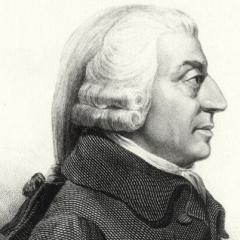
Adam Smith
Adam Smith, a renowned philosopher and economist from Britain, was born on June 5, 1723, and died on July 17, 1790. Known as the father of modern economics, his work 'The Wealth of Nations' had a profound impact on the development of economics. more
You May Also Like
Source: An inquiry into the nature and causes of the wealth of nations
Source: The Wealth of Nations: the Great Master
Source: Wealth of Nations (Abridged)
Source: An inquiry into the nature and causes of the wealth of nations
“China is a much richer country than any part of Europe.”
Source: An inquiry into the nature and causes of the wealth of nations
Source: The Wealth of Nations: An Inquiry Into the Nature and Causes of the Wealth of Nations: With an introduction by Jonathan B. Wight, University of Richmond
Source: An inquiry into the nature and causes of the wealth of nations
Source: An Inquiry Into the Nature and Causes of the Wealth of Nations With a Life of the Author: Also a View of the Doctrine of Smith, Compared with that of the French Economists, with a Method of Facilitating the Study of His Works, from the French of M. Jariner