Quotessence
Home / Quotes / Quote by Charles Lindbergh

Quote by Charles Lindbergh

“Science, freedom, beauty, adventure: what more could you ask of life? Aviation combined all the elements I loved. There was science in each curve of an airfoil, in each angle between strut and wire, in the gap of a spark plug or the color of the exhaust flame. There was freedom in the unlimited horizon, on the open fields where one landed. A pilot was surrounded by beauty of earth and sky. He brushed treetops with the birds, leapt valleys and rivers, explored the cloud canyons he had gazed at as a child. Adventure lay in each puff of wind.”

Quote by Charles Lindbergh

Author
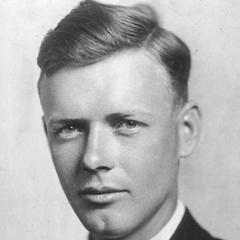
Charles Lindbergh
Charles Lindbergh

Charles Lindbergh, born on February 4, 1902, and died on August 26, 1974, was an American aviator renowned for his historic non-stop solo transatlantic flight in 1927. His flight, which he named 'The Spirit of St. Louis', not only broke records but also significantly advanced the field of aviation, inspiring generations of pilots. more

You May Also Like

“Splutter, splutter. Yes - we're off - we're rising. But why start off with an engine like that? But it smooths out now, like a long sigh, like a person breathing easily, freely. Like someone singing ecstatically, climbing, soaring - sustained note of power and joy. We turn from the lights of the city; we pivot on a dark wing; we roar over the earth. The plane seems exultant now, even arrogant. We did it, we did it!”

“Are we lost, or are we found at last? On earth we strive for our various needs, because so goes the fundamental law of man. Aloft, at least for a little while, the needs disappear. Likewise the striving. In the thoughts of man aloft, food and evil become mixed and sometimes reversed. This is the open door to wisdom. Aloft, the earth is ancient and man is young, regardless of his numbers, for there, aloft he may reaffirm his suspicions that he may not be so very much. This is the gateway to humility.”

“As the years go by, he returns to this invisible world rather than to earth for peace and solace. There also he finds a profound enchantment, although he can seldom describe it. He can discuss it with others of his kind, and because they too know and feel its power they understand. But his attempts to communicate his feelings to his wife or other earthly confidants invariable end in failure.”

“I had that morning gone to say my farewells to Broadhurst and to the RAF. I had made a point of going to HQ at Schleswig in my 'Grand Charles.' Coming back I had taken him high up in the cloudless summer sky, for it was only there that I could fittingly take my leave. Together we climbed for the last time straight towards the sun. We looped once, perhaps twice, we lovingly did a few slow, meticulous rolls, so that I could take away in my finger-tips the vibration of his supple, docile wings.”

“And should I not, had I but known, have flung the machine this way and that, once more to feel it live under my hand, have sported in the sky and laughed and sung, knowing that never after should I feel so free, so sure in hazard, so secure, riding the daylight in the pride of youth? No more horizons wider than Hope! No more the franchise of the sky, the freedom of the blue! No more! Farewell to wings! Down to the little earth!”