Quotessence
Home / Quotes / Quote by Mark Twain

Quote by Mark Twain

“For instance, take this sample: he has imagined a heaven, and has left entirely out of it the supremest of all his delights, the one ecstasy that stands first and foremost in the heart of every individual of his race - and of ours - sexual intercourse!It is as if a lost and perishing person in a roasting desert should be told by a rescuer he might choose and have all longed-for things but one, and he should elect to leave out water!”

Quote by Mark Twain

Author
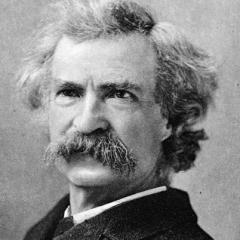
Mark Twain
Mark Twain

Mark Twain, born Samuel Langhorne Clemens, was a renowned American author and humorist in the 19th century. His works are characterized by humor, satire, and profound social insight, with notable novels such as 'The Adventures of Tom Sawyer' and 'The Adventures of Huckleberry Finn'. more

You May Also Like

“Only a fool takes offense at the truth, Jessamine. They are awful, of that there is no question. But they are also very charming. Purveyors of unspeakable suffering and indescribable delights. Performers of murders and miracles! You might grow to like them, if you got to know them as I do. But why has your beloved Crabgrass ventured into this garden of horrors, I wonder?”

“The mob hysteria over pedophiles has reached epidemic proportions and driven parents to panic. Today's Just Williams, today's Huck Finns, today's Swallows and Amazons are deprived of the freedom to roam that was one of the delights of childhood in earlier times (when the actual, as opposed to the perceived, risk of molestation was probably no less).”

“Some cities, like wrapped boxes under Christmas trees, conceal unexpected gifts, secret delights. Some cities will always remain wrapped boxes, containers of riddles never to be solved, nor even to be seen by vacationing visitors, or, for that matter, the most inquisitive, persistent travelers.”

“Amongst democratic nations men easily attain a certain equality of conditions: they can never attain the equality they desire. It perpetually retires from before them, yet without hiding itself from their sight, and in retiring draws them on. At every moment they think they are about to grasp it; it escapes at every moment from their hold. They are near enough to see its charms, but too far off to enjoy them; and before they have fully tasted its delights they die.”

“Jesus! it is the name which moves the harps of heaven to melody. Jesus! the life of all our joys. If there be one name more charming, more precious than another, it is this name. It is woven into the very warp and woof of our psalmody. Many of our hymns begin with it, and scarcely any, that are good for anything, end without it. It is the sum total of all delights. It is the music with which the bells of heaven ring; a song in a word; an ocean for comprehension, although a drop for brevity; a matchless oratorio in two syllables; a gathering up of the hallelujahs of eternity in five letters.”