Quotessence
Home / Quotes / Quote by B. C. Forbes

Quote by B. C. Forbes

“Employers, have you ever stopped to reckon what the goodwill of your workers is worth? ... In most large concerns it would be worth more in dollars and cents to have the goodwill of the working force than of those on the outside. It has been repeatedly demonstrated that the average working force is capable of increasing its production 25% or more whenever the workers fell so inclined. Workers animated by ill will cannot possibly give results equal to those of workers animated by goodwill. The tragic fact appears to be that a tremendous number of working forces are not so animated.”

Quote by B. C. Forbes

Author
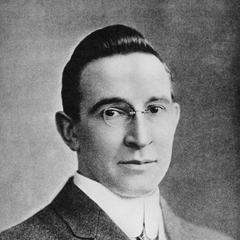
B. C. Forbes
B. C. Forbes

B. C. Forbes was an American journalist and publisher, born on May 14, 1880, and died on May 6, 1954. He is best known for founding Forbes magazine, which focuses on business, wealth, and investment. more

You May Also Like

“Many men who do creditable things refuse to let it be known. This is a mistake. While we all admire modesty, nevertheless there is a great national need to do everything possible to bring home to the rank and file of the people that all employers and all wealthy men are not grinding, mercenary, selfish skinflints, but that many of them take delight in doing helpful things for others ... Shortcomings of employers are constantly paraded. Why not let the public become acquainted with the better side which most present-day employers possess?”

“Are soft-hearted people handicapped in business? You have heard a businessman say of someone else, He's all right, but he's too soft-hearted.... To be soft-hearted may be handicapping, in a sense. But on the whole, a soft heart is to be preferred to a hard heart. Hard-hearted, severe, dominating giants sometimes manage to get further and to amass more money. But they get less genuine joy out of life.... It is the hard-boiled employer, not the soft-hearted species, that incites most of our strikes and does most to endanger the harmonious progress of democracy.”

“The more I move among workers and factories and other plants, the stronger I become convinced that it is advisable to have as [a company] president a practical man, preferably one who has risen from the very bottom of the ladder. Workmen, I find, have far more respect for such men than for collar-and-cuff executives knowing little or nothing about the different kinds of work which have to be done by the workers. Wherever circumstances call for placing a financier or lawyer or a papa's son at the head of a large organization, he should be made chairman or some other title, but not president.”

“After visiting several of America's most fashionable playgrounds, I have reached the conclusion that men who work hard enjoy life most. The men at such places can be divided into two classes, first, busy men of affairs ... and, second, rich loafers. I was impressed by the obvious enjoyment corporation heads and other important executives were deriving from their vacation activities.... The idle rich fellows, on the other hand, although indulging in exactly the same activities, palpably were bored.”

“Do too many executives still indulge in the short-sighted habit of issuing orders without taking the slightest pains to explain to those responsible for carrying them out the whyfor and wherefor of the orders? Where employees come in daily and hourly contact with the public, surely it is important that care be taken to fit them to reply intelligently to courteous questions. ""Because them are orders"" isn't a satisfying reply-even less satisfactory to the management than to the public.”

“It is a great mistake for presidents and other leading executives of organizations having branches throughout the country to chain themselves to their desks at headquarters and send out rigid instructions to those in charge of distant branches and offices. Because a man sits in a palatial office in New York or Chicago or Philadelphia or Detroit and draws a big salary, it does not necessarily follow that he knows better than the man on the spot what ought to be done.... Paul, Caesar, Napoleon did not merely sit at home and issue long-range instructions.”

“Whenever possible, I like to have the supreme head of a company show me over the works. It is extremely illuminating to note the attitude of workers towards their boss, and equally interesting to note the attitude towards the workers. It is tragic to notice how many chief executives of large concerns are absolutely unknown, even by sight, to the rank and file of their workers.”

“Managing the other fellow's business is a fascinating game. Trade unionists all over the country have pronounced ideas for the reform of Wall Street banks; and Wall Street bankers are not far behind in giving plans for the tremendous improvement of trade union policies. Wholesalers have schemes for improving the retailer; the retailer knows just what is wrong in the conduct of wholesale business-and we might go through a long list.... Yet for some reason the classes that ought to be helped keep on stubbornly clinging to their own method of running their affairs.”

“The majority of America's colossal fortunes have been made by entering industries in their early stages and developing leadership in them.... Think of what opportunities the present and the future contain in such fields as ship-building and ship-owning, aircraft, electrical development, the oil industry, different branches of the automotive industry, foreign trade, international banking, invention, the chemical industry, moving pictures, color photography, and, one night add, labor leadership.”

“The man who works 52 weeks in the year does not do his best in any one week of the year, Daniel Guggenheim, onetime head of the greatest smelting and mining family in America, impressed upon me. Real recreation quickens aspiration. The true purpose of recreation is not merely to amuse, not merely to afford pleasure, not merely to kill time, but to increase our fitness, enhance our usefulness, spur achievement.”