Quotessence
Home / Authors / B. C. Forbes
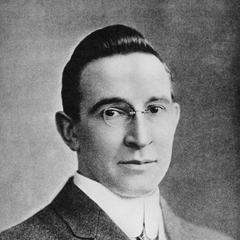
B. C. Forbes

B. C. Forbes Quotes

Journalist

Filter quotes by topic

Famous B. C. Forbes Quotes

“Had I not gone through the ordeal, in more than one country, of landing a job, I would he tempted to lose patience over the number of letters pouring in from fellows who want me or someone else to hand them a job on a silver platter with a guarantee that they will receive the wonderful promotion their talents warrant.... But a tragic number of young men and even older men have a notion that it is not up to them to prosecute the bettering process. They look to someone else to perform the trick for them.”

“Is America becoming decadent? Do we no longer regard our promises and pledges as sacred? ... We promised to make peace with Germany only in conjunction with the Allies; but we brought forward a separate peace, demanding for ourselves all the advantages of the Treaty of Versailles but rejecting all the responsibilities embodied in the Treaty. It was America's President who induced Europe to form a League of Nations; and then America was the first country that refused to joint it.... If these are not the symptoms of national decadency, what are they?”

“The British have their own conception of what constitutes the typical American. He must have a flavor of the Wild West about him. He must do spectacular things. He must not be punctilious about dignity, decorum and other refinements characteristic of the real British gentleman. The Yankee pictured by the Briton must be a bustler. If he is occasionally flagrantly indiscreet in speech and action, then he is so much more surely stamped the genuine article. The most typical American the British ever set their eyes on was, in their judgment, Theodore Roosevelt.”

“What would you call America's most priceless asset? Surely not its limitless natural resources, not its matchless national wealth, not its unequalled store of gold, not its giant factories, not its surpassing railroads, not its unprecedented volume of cheap power. Is not its most priceless asset the character of its people, their indomitable self-confidence, their transcendent vision, their sleepless initiative and, perhaps above all, their inherent, irrepressible optimism?”

“The man who is bigger than his job keeps cool. He does not lose his head, he refuses to become rattled, to fly off in a temper. The man who would control others must be able to control himself. There is something admirable, something inspiring, something soul-stirring about a man who displays coolness and courage under extremely trying circumstances. A good temper is not only a business asset. It is the secret of health. The longer you live, the more you will learn that a disordered temper breeds a disordered body.”

“Has your work become very easy? Do you find you can do it with little effort? Has it ceased to impose any strain or fatigue upon you? Do you no longer feel loss of vitality after a long spell of it? Can you now do it as easy as water rolls off a duck's back? If so, look out! Do some stock-taking. Examine your output.... Work done with little effort is likely to yield little result. Every job can be done excellently or indifferently. Excellence necessitates effort-hard, sustained, concentrated effort.”

“Ugliness, squalor are breeding grounds for revolution. Beauty is conducive to tranquillity, happiness. Beautifying of homes and places of worship began with the dawn of civilization. Beautifying of workplaces is only in its infancy. Yet, since men normally spend more than half of their waking hours at work, surely it is important that adequate attention be devoted to elevating their working environment, whether office or factory, foundry or machine shop, mine or warehouse. Beautiful surroundings subtly encourage beautiful living. Drab surroundings, bad air, bad light, evoke bad reactions.”

“J.P. Morgan, then past 70, was asked by the son of an eminent father why he [Morgan] didn't retire. When did your father retire? asked Mr. Morgan, without looking up from his desk. In 1902. When did he die? Oh, at the end of 1904. Huh! snapped Mr. Morgan, If he had kept on working he would have been alive still. Work is God's best medicine. It is God's medicine for man.”

“A certain ultra-dignified gentleman of unusual prominence carried himself so stiffly that nobody felt free to call him by his first name. He quarreled with a friend of earlier days and from then on the two never spoke. The day the friend died an associate found the ultra-dignified gentleman staring through the window. When he came out of his reverie, he soliloquized with a sigh, ""He was the last to call me John."" Is any man really entitled to regard himself a success who has failed to inspire at least a goodly number of fellow mortals to greet him by his first name?”

“If the World War [I] demonstrated anything it was that government ownership is fraught with the gravest dangers and usually leads to disaster. Take Britain. The two problems which have caused the greatest trouble since the war ended have been transportation and coal. The government seized both industries when the war broke out. It got them into such a hopeless mess that it does not know how to turn [In] coal; the government now realizes, it took hold of the tail of a wild animal and is afraid to let go.”

“If the United States is to produce a nation of investors-as we must if we are to gain financial world-leadership-it is imperative that boards of directors be so constituted as to adequately represent the interests and inspire the complete confidence of investors of moderate substance.”

“A young financial writer once brought ridicule upon himself by stating that a certain company had nothing to commend it except excellent earnings. Well, there are companies whose earnings are excellent but whose stocks I would never recommend. In selecting investments, I attach prime importance to the men behind them. I'd rather buy brains and character than earnings. Earnings can be good one year and poor the next. But if you put your money into securities run by men combining conspicuous brains and unimpeachable character, the likelihood is that the financial results will prove satisfactory.”

“Are your desires purely selfish? Do your tastes run to a grand home, automobiles, fine clothes, an abundance of amusements, and so forth? If so, look around you at people who have such things in superabundance. Are they any happier, do you think, than you are? Are they any better morally? Are they any stronger physically? Are they better liked by their friends than you are by your friends? ... Carnegie said, Millionaires rarely smile. This is substantially true.”

“The most famous self-made man in the world today is our own Edison. Talk with Mr. Edison and he will tell you he owes much if not most of his success to omnivorous reading. Forbes is one of his favorite publications. How closely he reads it can be gathered from a letter just received from him in which he asks the editor to forward a long analytical letter to the writer of a series of articles which contained two figures Mr. Edison questions, and he wants to know exactly on what authority or investigation they were based. Both letters were the product of Mr. Edison and were signed by him.”

“Thomas Edison reads not for entertainment but to increase his store of knowledge. He sucks in information as eagerly as the bee sucks honey from flowers. The whole world, so to speak, pours its wisdom into his mind. He regards it as a criminal waste of time to go through the slow and painful ordeal of ascertaining things for one's self if these same things have already been ascertained and made available by others. In Edison's mind knowledge is power.”

“Which is more worthwhile earning: a large fortune or the esteem and gratitude of the nation? This question is prompted anew by the death of ex-Secretary of the Interior [Franklin K.] Lane. He remained in public service, doing most noble work, until his means became absolutely exhausted, and he died before having had the opportunity to reaccumulate any bank account.... He died leaving no estate whatsoever. Is what he did leave more to be desired, more to be coveted, than a fortune reaching into six or seven figures?”

“With all thy getting, get understanding, is the banner under which these Forbes editorials have appeared since the first issue of the publication. We have no illusions about what great wealth can do and what it cannot do. We believe in the worthwhileness of striving by all worthy means to attain success and to attain wealth. Simply because we are convinced that no amount of money is worth the sacrifice of one's better instincts, of one's self-respect-of one's soul, if you wish-simply because we are convinced that riches not gained legitimately and decently are not worth having.”

“How many men I know who are earning dollars aplenty, but who are really earning little of what counts. They are so overwhelmingly engrossed in business that they get nothing from their dollars. The Juggernaut of dollar-making has crushed out of them every capacity for genuine enjoyment, every grace, every unselfish sentiment and instinct.”

“A big business man was telling Henry Ford about a coach driver of super-expertness with his whip. The driver was telling how he could flick a fly off his horse's ear with his whip-and, a fly alighting just then, he promptly did so. Next he spied a grasshopper beside the road, and he flicked it off with equal dexterity. A little further along the road the passenger noticed an insect on a bush, and nudged the driver to get him. Not on your life, replied the master of the whip. That there insect is a hornet sitting on his nest with an organization behind him. I leave him alone.”

“I have known not a few men who, after reaching the summits of business success, found themselves miserable on attaining retirement age. They were so exclusively engrossed in their day-to-day affairs that they had no time for friend-making.... They may flatter themselves that their unrelaxing concentration on business constitutes patriotism of the highest order. They may tell themselves that the existing emergency will pass, and that they can then adopt different, more sociable, more friendly habits. [But] such a day is little likely to come for such individuals.”

“New Year, the season for changes in positions and advances in salaries, approaches. If you have in your employ some who deserve more salary, do not compel them to go through the unpleasant ordeal of asking a raise, but, rather, voluntarily increase their remuneration. A raise that comes from the boss without asking is worth a lot more than one that has to be gouged out of him. Is it not true that a great many employers who would not dream of overcharging their customers have no qualms whatever about underpaying their employees if the latter will submit without protest?”

“Frank W. Woolworth once told me that the turning-point in his career did not come until he was thrown flat on his back by illness. He was sure that his business would go to pieces during his long, enforced absence. Instead, he discovered that he had in his employ men who could overcome difficulties when given power to exercise initiative. After that Woolworth left many problems and difficulties to be solved by subordinates and turned his attention to big things.”

“Henry Ford has several times sneered at unproductive stockholders.... Well, now. Let's see. Who made Henry Ford's own automobile company possible? The stockholders who originally advanced money to him. Who makes it possible for you and me to be carried to and from business by train or street car? Stockholders.... Who made our vast telephone and telegraph service possible? Stockholders.... Were stockholders all over the country to withdraw their capital from the enterprises in which they are invested, there would be a panic ... on a scale never before known.”

“Summer, with its dog days, its vacations, its distractions, is over. We have had our holidays, our rest, our recreation. The fall season, with its new opportunities for effort, enterprise and achievement, is upon us. Let us rip off our coats and get down to business. We may have allowed pessimism to grip us during the summer months. We may even have allowed laziness to enter our bones. Now it is up to us to throw off both lassitude and pessimism. The time has come for action, for aggressiveness.”

“Henry Ward Beecher, so the story goes, was once asked by a young preacher how he could keep his congregation wide awake and attentive during his sermons. Beecher replied that he always had a man watch for sleepers, with instructions, as soon as he saw anyone start nodding or dozing, to hasten to the pulpit and wake up the preacher. Aren't you and I usually less sensible? Would we not be inclined to have the watcher wake up not ourselves but the fellows caught sleeping? In other words, aren't we disposed always to blame others?”

“A magazine editor recently asked me to sit down on my 40th birthday and write an article on the most important things I had learned in my first 40 years. I told him that the chief thing I had learned was that the copybook maxims are true, but that too many people forget this once they go out into the heat and hustle and bustle of the battle of life and only realize their truth once one foot is beginning to slip into the grave. The man who has won millions at the cost of his conscience is a failure.”

“Talking things over has its place in an organization [but] so-called conferences are being grossly overdone. One executive stops at the desk of another to tell him, perhaps, about the wonderful score he made at golf on Saturday afternoon. This chin-chin immediately becomes a conference, and neither the office boy nor the telephone operator must disturb either gentleman. More idle gossip is indulged in at many business conferences these days than an old wives' sewing circle would be guilty of.”

“Employers, have you ever stopped to reckon what the goodwill of your workers is worth? ... In most large concerns it would be worth more in dollars and cents to have the goodwill of the working force than of those on the outside. It has been repeatedly demonstrated that the average working force is capable of increasing its production 25% or more whenever the workers fell so inclined. Workers animated by ill will cannot possibly give results equal to those of workers animated by goodwill. The tragic fact appears to be that a tremendous number of working forces are not so animated.”

“Many men who do creditable things refuse to let it be known. This is a mistake. While we all admire modesty, nevertheless there is a great national need to do everything possible to bring home to the rank and file of the people that all employers and all wealthy men are not grinding, mercenary, selfish skinflints, but that many of them take delight in doing helpful things for others ... Shortcomings of employers are constantly paraded. Why not let the public become acquainted with the better side which most present-day employers possess?”