Quotessence
Home / Quotes / Quote by B. C. Forbes

Quote by B. C. Forbes

“Henry Ford has several times sneered at unproductive stockholders.... Well, now. Let's see. Who made Henry Ford's own automobile company possible? The stockholders who originally advanced money to him. Who makes it possible for you and me to be carried to and from business by train or street car? Stockholders.... Who made our vast telephone and telegraph service possible? Stockholders.... Were stockholders all over the country to withdraw their capital from the enterprises in which they are invested, there would be a panic ... on a scale never before known.”

Quote by B. C. Forbes

Author
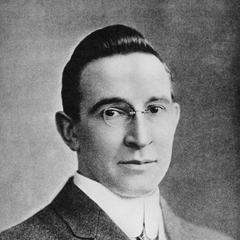
B. C. Forbes
B. C. Forbes

B. C. Forbes was an American journalist and publisher, born on May 14, 1880, and died on May 6, 1954. He is best known for founding Forbes magazine, which focuses on business, wealth, and investment. more

You May Also Like

“Summer, with its dog days, its vacations, its distractions, is over. We have had our holidays, our rest, our recreation. The fall season, with its new opportunities for effort, enterprise and achievement, is upon us. Let us rip off our coats and get down to business. We may have allowed pessimism to grip us during the summer months. We may even have allowed laziness to enter our bones. Now it is up to us to throw off both lassitude and pessimism. The time has come for action, for aggressiveness.”

“Henry Ward Beecher, so the story goes, was once asked by a young preacher how he could keep his congregation wide awake and attentive during his sermons. Beecher replied that he always had a man watch for sleepers, with instructions, as soon as he saw anyone start nodding or dozing, to hasten to the pulpit and wake up the preacher. Aren't you and I usually less sensible? Would we not be inclined to have the watcher wake up not ourselves but the fellows caught sleeping? In other words, aren't we disposed always to blame others?”

“A magazine editor recently asked me to sit down on my 40th birthday and write an article on the most important things I had learned in my first 40 years. I told him that the chief thing I had learned was that the copybook maxims are true, but that too many people forget this once they go out into the heat and hustle and bustle of the battle of life and only realize their truth once one foot is beginning to slip into the grave. The man who has won millions at the cost of his conscience is a failure.”

“Talking things over has its place in an organization [but] so-called conferences are being grossly overdone. One executive stops at the desk of another to tell him, perhaps, about the wonderful score he made at golf on Saturday afternoon. This chin-chin immediately becomes a conference, and neither the office boy nor the telephone operator must disturb either gentleman. More idle gossip is indulged in at many business conferences these days than an old wives' sewing circle would be guilty of.”

“Employers, have you ever stopped to reckon what the goodwill of your workers is worth? ... In most large concerns it would be worth more in dollars and cents to have the goodwill of the working force than of those on the outside. It has been repeatedly demonstrated that the average working force is capable of increasing its production 25% or more whenever the workers fell so inclined. Workers animated by ill will cannot possibly give results equal to those of workers animated by goodwill. The tragic fact appears to be that a tremendous number of working forces are not so animated.”

“Many men who do creditable things refuse to let it be known. This is a mistake. While we all admire modesty, nevertheless there is a great national need to do everything possible to bring home to the rank and file of the people that all employers and all wealthy men are not grinding, mercenary, selfish skinflints, but that many of them take delight in doing helpful things for others ... Shortcomings of employers are constantly paraded. Why not let the public become acquainted with the better side which most present-day employers possess?”

“Are soft-hearted people handicapped in business? You have heard a businessman say of someone else, He's all right, but he's too soft-hearted.... To be soft-hearted may be handicapping, in a sense. But on the whole, a soft heart is to be preferred to a hard heart. Hard-hearted, severe, dominating giants sometimes manage to get further and to amass more money. But they get less genuine joy out of life.... It is the hard-boiled employer, not the soft-hearted species, that incites most of our strikes and does most to endanger the harmonious progress of democracy.”

“The more I move among workers and factories and other plants, the stronger I become convinced that it is advisable to have as [a company] president a practical man, preferably one who has risen from the very bottom of the ladder. Workmen, I find, have far more respect for such men than for collar-and-cuff executives knowing little or nothing about the different kinds of work which have to be done by the workers. Wherever circumstances call for placing a financier or lawyer or a papa's son at the head of a large organization, he should be made chairman or some other title, but not president.”

“After visiting several of America's most fashionable playgrounds, I have reached the conclusion that men who work hard enjoy life most. The men at such places can be divided into two classes, first, busy men of affairs ... and, second, rich loafers. I was impressed by the obvious enjoyment corporation heads and other important executives were deriving from their vacation activities.... The idle rich fellows, on the other hand, although indulging in exactly the same activities, palpably were bored.”

“Do too many executives still indulge in the short-sighted habit of issuing orders without taking the slightest pains to explain to those responsible for carrying them out the whyfor and wherefor of the orders? Where employees come in daily and hourly contact with the public, surely it is important that care be taken to fit them to reply intelligently to courteous questions. ""Because them are orders"" isn't a satisfying reply-even less satisfactory to the management than to the public.”