Quotessence
Home / Quotes / Quote by B. C. Forbes

Quote by B. C. Forbes

“J.P. Morgan, then past 70, was asked by the son of an eminent father why he [Morgan] didn't retire. When did your father retire? asked Mr. Morgan, without looking up from his desk. In 1902. When did he die? Oh, at the end of 1904. Huh! snapped Mr. Morgan, If he had kept on working he would have been alive still. Work is God's best medicine. It is God's medicine for man.”

Quote by B. C. Forbes

Author
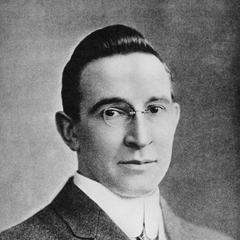
B. C. Forbes
B. C. Forbes

B. C. Forbes was an American journalist and publisher, born on May 14, 1880, and died on May 6, 1954. He is best known for founding Forbes magazine, which focuses on business, wealth, and investment. more

You May Also Like

“A certain ultra-dignified gentleman of unusual prominence carried himself so stiffly that nobody felt free to call him by his first name. He quarreled with a friend of earlier days and from then on the two never spoke. The day the friend died an associate found the ultra-dignified gentleman staring through the window. When he came out of his reverie, he soliloquized with a sigh, ""He was the last to call me John."" Is any man really entitled to regard himself a success who has failed to inspire at least a goodly number of fellow mortals to greet him by his first name?”

“If the World War [I] demonstrated anything it was that government ownership is fraught with the gravest dangers and usually leads to disaster. Take Britain. The two problems which have caused the greatest trouble since the war ended have been transportation and coal. The government seized both industries when the war broke out. It got them into such a hopeless mess that it does not know how to turn [In] coal; the government now realizes, it took hold of the tail of a wild animal and is afraid to let go.”

“If the United States is to produce a nation of investors-as we must if we are to gain financial world-leadership-it is imperative that boards of directors be so constituted as to adequately represent the interests and inspire the complete confidence of investors of moderate substance.”

“A young financial writer once brought ridicule upon himself by stating that a certain company had nothing to commend it except excellent earnings. Well, there are companies whose earnings are excellent but whose stocks I would never recommend. In selecting investments, I attach prime importance to the men behind them. I'd rather buy brains and character than earnings. Earnings can be good one year and poor the next. But if you put your money into securities run by men combining conspicuous brains and unimpeachable character, the likelihood is that the financial results will prove satisfactory.”

“Are your desires purely selfish? Do your tastes run to a grand home, automobiles, fine clothes, an abundance of amusements, and so forth? If so, look around you at people who have such things in superabundance. Are they any happier, do you think, than you are? Are they any better morally? Are they any stronger physically? Are they better liked by their friends than you are by your friends? ... Carnegie said, Millionaires rarely smile. This is substantially true.”

“The most famous self-made man in the world today is our own Edison. Talk with Mr. Edison and he will tell you he owes much if not most of his success to omnivorous reading. Forbes is one of his favorite publications. How closely he reads it can be gathered from a letter just received from him in which he asks the editor to forward a long analytical letter to the writer of a series of articles which contained two figures Mr. Edison questions, and he wants to know exactly on what authority or investigation they were based. Both letters were the product of Mr. Edison and were signed by him.”

“Thomas Edison reads not for entertainment but to increase his store of knowledge. He sucks in information as eagerly as the bee sucks honey from flowers. The whole world, so to speak, pours its wisdom into his mind. He regards it as a criminal waste of time to go through the slow and painful ordeal of ascertaining things for one's self if these same things have already been ascertained and made available by others. In Edison's mind knowledge is power.”

“Which is more worthwhile earning: a large fortune or the esteem and gratitude of the nation? This question is prompted anew by the death of ex-Secretary of the Interior [Franklin K.] Lane. He remained in public service, doing most noble work, until his means became absolutely exhausted, and he died before having had the opportunity to reaccumulate any bank account.... He died leaving no estate whatsoever. Is what he did leave more to be desired, more to be coveted, than a fortune reaching into six or seven figures?”

“With all thy getting, get understanding, is the banner under which these Forbes editorials have appeared since the first issue of the publication. We have no illusions about what great wealth can do and what it cannot do. We believe in the worthwhileness of striving by all worthy means to attain success and to attain wealth. Simply because we are convinced that no amount of money is worth the sacrifice of one's better instincts, of one's self-respect-of one's soul, if you wish-simply because we are convinced that riches not gained legitimately and decently are not worth having.”