Quotessence
Home / Quotes / Quote by Marita Bonner

Quote by Marita Bonner

“That is what they call being reconciled to die. They call it reconciled when pain has strummed a symphony of suffering back and forth across you, up and down, round and round you until each little fibre is worn tissue-thin with aching. And when you are lying beaten, and buffeted, battered and broken - pain goes out, joins hands with Death and comes back to dance, dance, dance, stamp, stamp, stamp down on you until you give up.”

Quote by Marita Bonner

Work

Frye Street & environs: the collected works of Marita Bonner

This volume gathers Bonner's short fiction, essays, and plays, many of which originally appeared in periodicals such as The Crisis and Opportunity during the 1920s and 1930s. The works explore the lives of Black urban residents, particularly women, navigating the social and economic constraints of early twentieth-century American cities. Bonner's prose addresses themes of racial identity, class mobility, gender roles, and the tensions between provincial and cosmopolitan Black experiences. The Frye Street setting serves as a recurring symbolic landscape through which she examines community dynamics and individual aspiration. The collection preserves writings that had fallen out of circulation, contributing to the recovery of Bonner's literary presence and offering insight into the broader scope of Harlem Renaissance literature beyond its more widely anthologized figures. more

Author
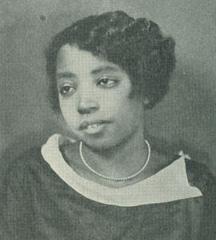
Marita Bonner
Marita Bonner

Marita Bonner, a prominent writer, was born on June 16, 1899, and passed away on December 6, 1971. Her works are renowned for their profound insight into human nature and social issues. more

You May Also Like

“The Louvre! The Louvre has me in its clutches. Every time I'm there rich blessings rain down upon me. I am coming to understand Titian more and more and learning to love him. And then there is Botticelli's sweet Madonna, with red roses behind her, standing against a blue-green sky. And Fiesole with his poignant little biblical stories, so simply told, often so glorious in their colors.”

“I love color. It must submit to me. And I love art. I kneel before it, and it must become mine. Everything around me glows with passion. Every day reveals a new red flower, glowing, scarlet red. Everyone around me carries them. Some wear them quietly hidden in their hearts. And they are like poppies just opening, of which one can see only here and there a hint of red petal peeking out from the green bud.”

“It is my experience that marriage does not make one happier. It destroys the illusion that has been the essence of one's previous existence, that there existed something like a soul-mate. The feeling of not being understood is heightened in marriage by the fact that one's entire life beforehand had the aim of finding a being who would understand one. But isn't it better to exist without such an illusion and look this great lonely truth straight in the eye?”

“I know I shall not live very long. But why is that so sad? Is a festival more beautiful because it lasts longer? My sensuous perceptions grow sharper, as if I were supposed to take in everything with the few years that will be offered to me ... And now love will still blossom for me before I depart, and if I've painted three good pictures, then I shall leave gladly with flowers in my hand and my hair.”

“I paint; I'm a woman but I don't paint china. The first time I got a canvas I felt free. Art is overreaction to life. I love these early drawings; they show my innocent beginnings in a small town. Life is a sentence -- you live it out. Maybe these portraits jump out at you too much. People like things that conform.”