Quotessence
Home / Quotes / Quote by Cecil Williams

Quote by Cecil Williams

“When the musician starts improvising, he never can go back to what he did last Sunday. That's what's frightening to a lot of people who can't let themselves go. But it's also very invigorating and very releasing because it opens you up to be yourself.”

Quote by Cecil Williams

Author
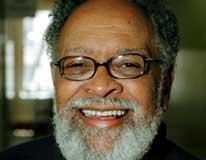
Cecil Williams
Cecil Williams

Cecil Williams (born September 22, 1929) is a renowned American pastor and social activist who served as the senior minister at Glide Memorial Church in San Francisco. Known as a champion for the poor and marginalized, Williams transformed his congregation into a center for social justice and community service, advocating for civil rights, economic equality, and humanitarian causes throughout his ministry. more

You May Also Like

“The music certainly plays a major role. You can be free enough to comfort each other, to touch each other, to embrace each other, to engage each other, to not be afraid of each other. The music certainly has that very strong element. Go back to folk songs, gospel, jazz, and spirituals. See, all of that came out of tremendous pain and hurt, rejection, loss, alienation, and abandonment. What I'm doing is I'm expressing my pain and hope at the same time.”

“I don't go and study other folks. I come from where I came from, as a kid, in the little black church I grew up in. And some of the things they did I rejected, because I could see that it was a manipulation and an exaggeration. My struggle is never to fool folks; to keep it authentic - who we are and who we are becoming - rather than to mimic or to translate what others do into my own terms.”

“I'm not interested in being an intellectual or in being traditional, conventional. I'm not interested in having great wisdom. I'm not interested in those facets of the evangelical movement. I don't have to get stuff from them. I got my own stuff. If it hits you, okay. That's why I've got so many different races, classes, and such a mixture of theologies and philosophies. I've got agnostics, atheists, Buddhists, Christians, Jews, Muslims the whole spectrum.”

“I was the fifth child in a family of six, five boys and one girl. Bless that poor girl. We were very poor; it was the 30s. We survived off of the food and the little work that my father could get working on the roads or whatever the WPA provided. We were always in line to get food. The survival of our family really depended on the survival of the other black families in that community. We had that village aspect about us, that African sense about us. We always shared what we had with each other. We were able to make it because there was really a total family, a village.”

“That's critical to me, the community. When I was 12 years old, I had a mental breakdown; I went berserk for a long time. I felt rejection from the white community. Couldn't understand why the pigmentation of my skin kept me from doing. Everybody always told me "You're going to be something." And of course, I began to raise questions about why it is that white folks treat us the way they do. The breakdown was very vivid. I just all of a sudden felt like I had been overcome by a train.”

“Any racism or barriers that may be put up, you get a tremendous sense of resistance. The more you push me, the greater I am. You can't hold me down. And the church helped me do that. My family helped that. The whole issue of struggle is critical in my life. Resistance, finding ways to resist. That does not mean you do somebody in to get it. No, it means finding ways to be human in what you do, but making sure that you get it done.”

“When people get up on the stage and say, "I've got AIDS," or "I'm in recovery," gosh, it's hard for them. It's like that story touches every person's story. You know, they open their entire humanity up. Storytelling is very important in life. Telling the truth is critical. It's like, again, the melody. The melody of jazz music is the truth, for me.”