“If we can combine our knowledge of science with the wisdom of wildness, if we can nurture civilization through roots in the primitive, man's potentialities appear to be unbounded, Through this evolving awareness, and his awareness of that awareness, he can emerge with the miraculous-to which we can attach what better name than 'God'? And in this merging, as long sensed by intuition but still only vaguely perceived by rationality, experience may travel without need for accompanying life.”
Quote by Charles Lindbergh
Author
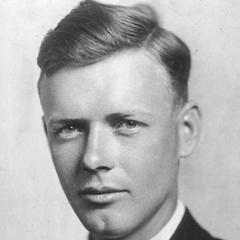
Charles Lindbergh
Charles Lindbergh, born on February 4, 1902, and died on August 26, 1974, was an American aviator renowned for his historic non-stop solo transatlantic flight in 1927. His flight, which he named 'The Spirit of St. Louis', not only broke records but also significantly advanced the field of aviation, inspiring generations of pilots. more
You May Also Like
Source: A Stubbornly Persistent Illusion: The Essential Scientific Works of Albert Einstein
Source: Sir Isaac Newton's Mathematical Principles of Natural Philosophy and His System of the World
“Laws of Nature are God's thoughts thinking themselves out in the orbs and the tides.”
Source: Geological Sketches
Source: An Oration on the Gods