Quotessence
Home / Quotes / Quote by Paul Auster

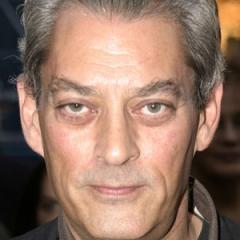
Quote by Paul Auster

“I tend to think that everything counts. In the end, each life is no more than the sum of contingent facts, a chronicle of chance intersections, of flukes, of random events that divulge nothing but their own lack of purpose.”

Quote by Paul Auster

Work

The New York Trilogy

The New York Trilogy is a critically acclaimed series of three interconnected novellas that delve into the complexities of human nature and the urban landscape. The stories are known for their intricate plots, philosophical musings, and the way they blur the lines between fiction and reality. more

Author

Paul Auster
Paul Auster

Paul Auster is an American author known for his unique narrative style and philosophical reflections. His works often explore themes of identity, memory, and reality, and have won him a wide audience. more

You May Also Like

“Yes. A language that will at last say what we have to say. For our words no longer correspond to the world. When things were whole, we felt confident that our words could express them. But little by little these things have broken apart, shattered, collapsed into chaos. And yet our words have remained the same. Hence, every time we try to speak of what we see, we speak falsely, distorting the very thing we are trying to represent. […] Consider a word that refers to a thing- “ umbrella”, for example. […] Not only is an umbrella a thing, it is a thing that performs a function. […] What happens when a thing no longer performs its function? […] the umbrella ceases to be an umbrella. It has changed into something else. The word, however, has remained the same. Therefore it can no longer express the thing.”

“They have trapped Blue into doing nothing, into being so inactive as to reduce his life to almost no life at all. Yes, says Blue to himself, that's what it feels like: like nothing at all. He feels like a man who has been condemned to sit in a room and go on reading a book for the rest of his life. This is strange enough - to be only half alive at best, seeing the world only through words, living only through the lives of others.”

“And then, of course, there was the sari itself. What a garment, Randy! There isn’t another outfit in the world that balances better the twin feminine urges to conceal and reveal. It outlines the woman’s shape but hides the faults a skirt can’t — under a sari a heavy behind, unflattering legs are invisible. But it also reveals the midriff, a part of the anatomy most Western women hide all the time. I was mesmerized, Randy, by the mere fact of being able to see her belly button when she walked, the single fold of flesh above the knot of her sari, the curve of her waist toward her hips. That swell of flesh just above a woman’s hipbone, Randy, is the sexiest part of the female anatomy to me. And I didn’t even have to undress her to see it. I was completely smitten.”

“She could just distinguish his features, as he slept the perfect sleep. In this darkness, she seemed to see him so distinctly. But he was far off, in another world. Ah, she could shriek with torment, he was so far off, and perfected, in another world. She seemed to look at him as at a pebble far away under clear dark water. And here was she, left with all the anguish of consciousness, whilst he was sunk deep into the other element of mindless, remote, living shadow-gleam. He was beautiful, far-off, and perfected. They would never be together. Ah, this awful, inhuman distance which would always be interposed between her and the other being! There was nothing to do but to lie still and endure. She felt an overwhelming tenderness for him, and a dark, under-stirring of jealous hatred, that he should lie so perfect and immune, in an other-world, whilst she was tormented with violent wakefulness, cast out in the outer darkness.”