Quotessence
Home / Quotes / Quote by Milan Kundera

Quote by Milan Kundera

“It is precisely when their interior worlds change shape that Bezukhov and Bolkonsky are confirmed as individuals; that they surprise; that they make themselves different; that their freedom catches fire, and with it the identity of their selves; these are moments of poetry: they experience them with such intensity that the whole world rushes forward to meet them with an intoxicating parade of wondrous details. In Tolstoy, man is the more himself, the more an individual, when he has the strength, the imagination, the intelligence, to transform himself. By contrast, the people I see changing their attitude toward Lenin, Europe, and so on expose their nonindividuality. This change is neither their own creation nor their own invention, not caprice or surprise or thought or madness; it has no poetry; it is nothing but a very prosaic adjustment to the changing spirit of History. That is why they don't even notice it; in the final analysis, they always stay the same: always in the right, always thinking what, in their milieu, a person is supposed to think; they change not in order to draw closer to some essential self but in order to merge with everyone else; changing lets them stay unchanged. Another way of expressing it: they change their mind in accordance with the invisible tribunal that is also changing its mind; their change is thus simply a bet on what the tribunal will proclaim to be the truth tomorrow.”

Quote by Milan Kundera

Work

Testaments Betrayed: An Essay in Nine Parts

Browse quotes and source details for this work. more

Author
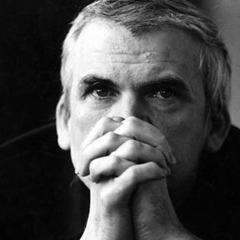
Milan Kundera
Milan Kundera

Milan Kundera is a renowned Czech-French writer known for his profound psychological insights and unique narrative techniques. His works often explore themes of personal freedom, love, morality, and existentialism, with notable titles including 'The Unbearable Lightness of Being' and 'The Joke'. more

You May Also Like

“This is the paradox of public space: even if everyone knows an unpleasant fact, saying it in public changes everything. One of the first measures taken by the new Bolshevik government in 1918 was to make public the entire corpus of tsarist secret diplomacy, all the secret agreements, the secret clauses of public agreements etc. There too the target was the entire functioning of the state apparatuses of power.”

“Война живет радикализацией схватки. Она является отрицанием равноценности жизни всех людей и потому ведет к различению между другом и врагом, между товарищем по оружию и противником. Тот или иной противник, будучи назван врагом, подвергается раз-индивидуализации, вследствие чего его жизнь признается ничтожной. Поскольку в гражданском состоянии власть распоряжаться насилием, угроза его применения и возможность использования принадлежат государству, то и право различения на друга и врага передается ему, а не остается делом сражающихся. Теперь сражающиеся не вправе решать, кто их друг, а кто враг, т. е. идентифицировать в качестве таковых тех или иных людей.”

“Nói đúng ra thì phần lớn thế giới đã không còn có lịch sử, bởi vì nền chuyên chế của Tập quán đã hoàn tất triệt để. Đó là trường hợp của toàn thể phương Đông. Ở đó Tập quán là tiếng nói quyết định cuối cùng. Công lý và quyền năng có nghĩa là sự uốn theo tập quán; không ai dám có ý nghĩ chống lại lý lẽ của tập quán, ngoại trừ bạo chúa nào đó quá bốc đồng với quyền lực. Và chúng ta nhìn thấy kết quả. Các dân tộc ấy hẳn là đã từng có tính độc đáo; không phải ngay xuất phát từ đầu họ đã có được dân cư đông đúc, có chữ viết, tinh thông nhiều môn nghệ thuật; họ đã tạo nên tất cả những thứ đó và vào thời đó họ đã là những dân tộc vĩ đại nhất, hùng mạnh nhất của thế giới. Còn bây giờ thì họ là gì?[...] Có vẻ như là một dân chúng có thể tiến bộ trong một khoảng thời gian rồi ngừng lại. Khi nào thì nó ngừng lại? Khi nó thôi không còn có được cá tính.”

“Individuals often turn to poetry, not only to glean strength and perspective from the words of others, but to give birth to their own poetic voices and to hold history accountable for the catastrophes rearranging their lives.”

“Dear Fellow Human Being, You are born wild, You do not deserve to be tamed! Tell yourself, You do not deserve this! All those toxic words you have to listen from people, All those fears they try to pin on your mind, All those giggles they aim at your dreams, All those judgmental stares inspecting your individuality, All those fingers pointing towards your crude character, All those shackles that tie your feet to social expectations, All those cages that do not let your imagination fly free, Listen deeply, you do not deserve any of it. My dear fellow human, you do not deserve this hostility. You are born wild, You do not deserve to be tamed! ― Jasz Gill”

“He recognized that need, in Odonian terms, as his "cellular function." the analogic term for the individual's individuality, the work he can do best, therefore his best contribution to his society. A healthy society would let him exercise that optimum function freely, in the coordination of all such functions finding its adaptability and strength. That was a central idea of Odo's Analogy. That the Odonian society on Anarres had fallen short of the ideal did not, in his eyes, lessen his responsibility to it; just the contrary. With the myth of the State out of the way, the real mutuality and reciprocity of society and the individual became clear. Sacrifice mught be demanded of the individual, but never compromise: for though only the society could give security and stability, only the individual, the person, had the power of moral choice -- the power of change, the essential function of life. The Odonian society was conceived as a permanent revolution, and revolution begins in the thinking mind.”