Quotessence
Home / Quotes / Quote by Peter Singer

Quote by Peter Singer

“At least ten times as many people died from preventable, poverty-related diseases on September 11, 2011, as died in the terrorist attack on the World Trade Center and the Pentagon on that black day. The terrorist attacks led to trillions of dollars being spent on the ‘war on terrorism’ and on security measures that have inconvenienced every air traveller since then. The deaths caused by poverty were ignored. So whereas very few people have died from terrorism since September 11, 2001, approximately 30,000 people died from poverty-related causes on September 12, 2001, and on every day between then and now, and will die tomorrow. Even when we consider larger events like the Asian tsunami of 2004, which killed approximately 230,000 people, or the 2010 earthquake in Haiti that killed up to 200,000, we are still talking about numbers that represent just one week’s toll for preventable, poverty-related deaths — and that happens fifty-two weeks in every year.”

Quote by Peter Singer

Work

Practical Ethics

This book analyzes ethical theory in the context of concrete moral choices and everyday situations. The work addresses questions about how individuals and societies should make ethical decisions when confronted with dilemmas involving harm, welfare, and moral responsibility. Through case-based examination, the author explores the application of ethical frameworks to practical affairs, considering both personal conduct and broader social issues requiring moral judgment. more

Author
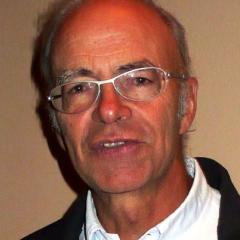
Peter Singer
Peter Singer

Peter Singer (born July 6, 1946) is an Australian moral philosopher renowned for his work in applied ethics, particularly animal liberation, effective altruism, and global poverty. He is a professor of bioethics at Princeton University and author of 'Animal Liberation,' a foundational text of the animal rights movement. Singer argues for extending moral consideration to all sentient beings based on utilitarian principles. His controversial views have sparked global debates but profoundly influenced contemporary ethics, charity practices, and animal welfare policies. more

You May Also Like

“I see a role for specialized knowledge, but I think that it's important for there to be an arena where it is shared, where it is communicated. It's not that somebody shouldn't have specialized knowledge. The ability to dig a trench and lay a cable is a kind of specialized knowledge. Farmers have specialized knowledge, too. The question is: what sort of knowledge is privileged in our societies? I don't think that a CEO is more valuable to society and ought to be paid ten million dollars a year, while farmers and laborers starve. The range of what is valued has become so extreme that one lot of people have captured it and left three-quarters of the world to live in unthinkable poverty, because their work is not valued. What would happen if the sweepers of the city went on strike or the sewage system didn't work? A CEO wouldn't be able to deal with his own shit.”

“The worst feeling was poor. Because in Haiti, so many people are poor, it's nothing to be ashamed of. And there's always a way to degaje, to get by, even when you have nothing. But misery in the United States is harder than misery in Haiti. You feel like it's your fault for being poor. And if you don't have any money, you can't eat. You won't have a house. If you fall, there's nowhere to go and no one to catch you. Everyone back in Haiti assumes that once you've arrived lòt bò, that it's a good life, that you're living well. And it feels so shameful to tell anyone that it's not true.”

“I am here because I worked too hard and too long not to be here. But although I told the university that I would walk across the stage to take my diploma, I won’t. At age fifty-seven, I’m too damned old, and I’d look ridiculous in this crowd. From where I’m standing in the back of the hall, I can see that I am at least two decades older than most of the parents of these kids in their black caps and gowns. So I’ll graduate with this class, but I won’t walk across the stage and collect my diploma with them; I’ll have the school send it to my house. I only want to hear my name called. I’ll imagine what the rest would have been like. When you’ve had a life like mine, you learn to do that, to imagine the good things. The ceremony is about to begin. It’s a warm June day and a hallway of glass doors leading to the parking lot are open, the dignitaries march onto the stage, a janitor slams the doors shut, one after the other. That banging sound. It’s Christmas Day 1961 and three Waterbury cops are throwing their bulk against our sorely overmatched front door. They are wearing their long woolen blue coats and white gloves and they swear at the cold. They’ve finally come for us, in the dead of night, to take us away, just as our mother said they would.”

“For the first time in my life, I was eating well and from plates—glass plates, no less, not out of the frying pan because somebody lost all the plates in the last move. Now when we ate, we sat at a fine round oak table in sturdy chairs that matched. No one rushed through the meal or argued over who got the biggest portion, and we ate three times a day.”