Quotessence
Home / Quotes / Quote by Antonie van Leeuwenhoek

Quote by Antonie van Leeuwenhoek

“I have divers times examined the same matter (human semen) from a healthy man... not from a sick man... nor spoiled by keeping... for a long time and not liquefied after the lapse of some time... but immediately after ejaculation before six beats of the pulse had intervened; and I have seen so great a number of living animalcules... in it, that sometimes more than a thousand were moving about in an amount of material the size of a grain of sand... I saw this vast number of animalcules not all through the semen, but only in the liquid matter adhering to the thicker part.”

Quote by Antonie van Leeuwenhoek

Author
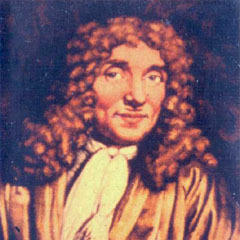
Antonie van Leeuwenhoek

Dutch microscopist known as the 'Father of Microscopy'. Born on October 24, 1632, and died on August 26, 1723. He made significant contributions to microbiology by observing microorganisms through his self-made microscopes. more

You May Also Like

“The human mind prefers something which it can recognize to something for which it has no name, and, whereas thousands of persons carry field glasses to bring horses, ships, or steeples close to them, only a few carry even the simplest pocket microscope. Yet a small microscope will reveal wonders a thousand times more thrilling than anything which Alice saw behind the looking-glass.”

“You are literally filled with the fruit of your own devices, with rats and mice and such small deer, paramecia, and entomostraceæ, and kicking things with horrid names, which you see in microscopes at the Polytechnic, and rush home and call for brandy-without the water-stone, and gravel, and dyspepsia, and fragments of your own muscular tissue tinged with your own bile.”

“Descartes, the father of modern philosophy ... would never-so he assures us-have been led to construct his philosophy if he had had only one teacher, for then he would have believed what he had been told; but, finding that his professors disagreed with each other, he was forced to conclude that no existing doctrine was certain.”

“The demand for certainty is one which is natural to man, but is nevertheless an intellectual vice. If you take your children for a picnic on a doubtful day, they will demand a dogmatic answer as to whether it will be fine or wet, and be disappointed in you when you cannot be sure.”