Quotessence
Home / Quotes / Quote by Vladimir Nabokov

Quote by Vladimir Nabokov

“I'd much prefer to speak of the modern books that I hate at first sight: the earnest case histories of minority groups, the sorrows of homosexuals, the anti-American Sovietnam sermon, the picaresque yarn larded with juvenile obscenities.”

Quote by Vladimir Nabokov

Author
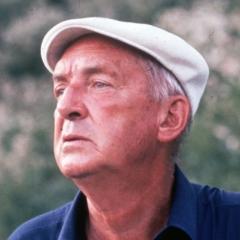
Vladimir Nabokov
Vladimir Nabokov

Russian-born American novelist, best known for his novel 'Lolita'. Nabokov is renowned for his unique literary style and profound use of language and symbolism. more

You May Also Like

“Everything tarred with the “Marxist” brush by right wingers never once involves Marxism, and never once advocates anything Marxist. Not a single major politician in the USA espouses any Marxist positions, or cites Marxism. The idea that America – a seriously right wing nation, with a far right President – is rife with Marxism is just about the biggest joke since a rebellious and troubled Jewish teen claimed that God fucked her rather than confess to an affair with a married man that resulted in her pregnancy.”

“Another tried-and-true method for bending subjects to the state's will is inducing guilt. Any increase in private well-being can be attacked as "unconscionable greed, "materialism",, or "excessive affluence." Profit-making can be attacked as "exploitation" and "usury", mutually beneficial exchanges are denounced as selfishness, and somehow, with the conclusion always being drawn that more resources should be siphoned from the private to the public sector. The induced guilt makes the public more ready to do just that. While individual persons tend to indulge in "selfish greed", the failure of the state's rulers to engage in exchanges is supposed to signify their devotion to higher and nobler causes, parasitic predation being apparently morally and aesthetically lofty as compared to peaceful and productive work.”

“God has the capacity to look at the world through two lenses. When God looks at a painful or wicked event through his narrow lens, he sees the tragedy or the sin for what it is in itself and he is angered and grieved. “I do not delight in the death of anyone, says the Lord God” (Ezek. 18:32). But when God looks at a painful or wicked event through his wide-angle lens, he sees the tragedy or the sin in relation to everything leading up to it and everything flowing out from it. He sees it in all the connections and effects that form a pattern or mosaic stretching into eternity. This mosaic, with all its (good and evil) parts he does delight in (Ps. 115:3).”

“It is easy enough to make a plan of life of which the background is black, as the pessimists do; and then admit a speck or two of star-dust more or less accidental, or at least in the literal sense insignificant. And it is easy enough to make another plan on white paper, as the Christian Scientists do, and explain or explain away somehow such dots or smudges as may be difficult to deny. Lastly it is easiest of all perhaps, to say as the dualists do, that life is like a chess-board in which the two are equal, and can as truly be said to consist of white squares on a black board or of black squares on a white board. But every man feels in his heart that none of these three paper plans is like life; that none of these worlds is one in which he can live. Something tells him that the ultimate idea of a world is not bad or even neutral; staring at the sky or the grass or the truths of mathematics or even a new-laid egg, he has a vague feeling like the shadow of that saying of the great Christian philosopher, St. Thomas Aquinas, 'Every existence, as such, is good.' On the other hand, something else tells him that it is unmanly and debased and even diseased to minimise evil to a dot or even a blot. He realises that optimism is morbid. It is if possible even more morbid than pessimism. These vague but healthy feelings, if he followed them out, would result in the idea that evil is in some way an exception but an enormous exception; and ultimately that evil is an invasion or yet more truly a rebellion. He does not think that everything is right or that every thing is wrong, or that everything is equally right and wrong. But he does think that right has a right to be right and therefore a right to be there, and wrong has no right to be wrong and therefore no right to be there.”

“And now that we exercise so comprehensive a medical and technological mastery over whole regions or nature at whose mercy our ancestors lived out their lives, we enjoy the unprecedented luxury of being able to render the 'natural' at once remote and benign. It is we who summon it, rather than the reverse, and we do so at our pleasure; it dwells with us, not we with it. We are free to sentimentalize or romanticize it, or even weave a veil of empty and unthreatening sanctity around it - until the moment when disease, age, infirmity, or random violence suddenly defeats us, or fire, flood, tempest, volcanic eruption, or earthquake surprise us by vaulting past our defenses. Then nature astonishes and horrifies us with its power, immensity, and sublime indifference. Even at such times, though, it is unlikely that we truly hate it; ours is a disenchanted world because it is one from which our love, reverence, dread, and hatred have all been irrevocably alienated. Nature for us is a single, internally consistent thing, an event, lovely and enticing, then terrible and pitiless, abundant and destructive at once, but moved neither by will nor by intelligence; it is sheer fact.”

“There is, of course, some comfort to be derived from the thought that everything that occurs at the level of secondary causality - in nature or history - is governed not only by a transcendent providence but by a universal teleology that makes every instance of pain and loss an indispensable moment in a grand scheme whose ultimate synthesis will justify all things. But one should consider the price at which the comfort is purchased: it requires us to believe in and love a God whose good ends will be realized not only in spite of - but entirely by way of - every cruelty, every fortuitous misery, every catastrophe, every betrayal, every sin the world has ever known; it requires us to believe in the eternal spiritual necessity of a child dying an agonizing death from diphtheria, of a young mother ravaged by cancer, of tens of thousands of Asians swallowed in an instant by the sea, of millions murdered in death camps and gulags and forced famines (and so on). It is a strange thing indeed to seek peace in a universe rendered morally intelligible at the cost of a God rendered morally loathsome.”