“it seems that once again people engage in a search for evidence that is biased toward confirmation. Asked to assess the similarity of two entities, people pay more attention to the ways in which they are similar than to the ways in which they differ. Asked to assess dissimilarity, they become more concerned with differences than with similarities. In other words, when testing a hypothesis of similarity, people look for evidence of similarity rather than dissimilarity, and when testing a hypothesis of dissimilarity, they do the opposite. The relationship one perceives between two entities, then, can vary with the precise form of the question that is asked”
Quote by Thomas Gilovich
Work
How We Know What Isn't So: The Fallibility of Human Reason in Everyday Life
Browse quotes and source details for this work. more
Author
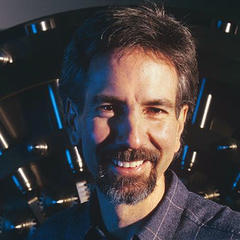
Thomas Gilovich
Thomas Gilovich is an esteemed psychologist born in the United States in 1954. He is known for his research in the field of cognitive psychology, particularly his work on decision-making and judgment. Professor Gilovich teaches at Cornell University and has published numerous papers on human cognitive biases and decision-making psychology. more
You May Also Like
Source: How We Know What Isn't So: The Fallibility of Human Reason in Everyday Life
“God is the composer; you are the song.”
Source: Unapologetically You: Reflections on Life and the Human Experience
Source: Berenice
“Miracles define common sense.”
Source: My Ancestor Was an Ancient Astronaut
Source: His Majesty's Dragon
Source: Lone Wolf
Source: Skellig
Source: An Introduction to Logic and Scientific Method
Source: Introduction to Logical Theory