Quotessence
Home / Quotes / Quote by Rebecca Solnit

Quote by Rebecca Solnit

“This is the strange life of books that you enter along as a writer, mapping an unknown territory that arises as you travel. If you succeed in the voyage, others enter after, one at a time, also alone, but in communion with your imagination, traversing your route. Books are solitudes where we meet.”

Quote by Rebecca Solnit

Work

The Faraway Nearby

In this evocative work, the author weaves together personal anecdotes, fairy tales, and literary references to create a tapestry of interconnected narratives. The story delves into the complexities of mother-daughter relationships, the passage of time, and the power of storytelling as a means of understanding and coping with life's challenges. more

Author

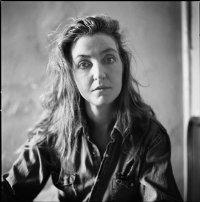
Rebecca Solnit
Rebecca Solnit

Rebecca Solnit is an American writer known for her works on environmental, cultural, political, and social issues. Her writing spans a wide range of topics, including nature, travel, gender, and power. Her books include 'Wanderlust', 'A Field Guide to Getting Lost', and 'The Faraway Nearby'. more

You May Also Like

“They laid up in the shade of a rock shelf until past noon, scratching out a place in the gray lava dust to sleep, and they set forth in the afternoon down the valley following the war trail and they were very small and they moved very slowly in the immensity of that landscape. Come evening they hove toward the rimrock again and Sproule pointed out a dark stain on the face of the barren cliff. It looked like the black from old fires. The kid shielded his eyes. The scalloped canyon walls rippled in the heat like drapery folds.”

“I am suggesting is that the past, as we remember it, has little to do with causal or determining factos that have in some way made, or influenced, us as we are today. Rather, the remembered past provides us with the means to maintain, or validate, who we are today and to give focus and direction to who we might wish to become at some future point in time.”

“I am suggesting is that the past, as we remember it, has little to do with causal or determining factors that have in some way made, or influenced, us as we are today. Rather, the remembered past provides us with the means to maintain, or validate, who we are today and to give focus and direction to who we might wish to become at some future point in time.”

“منذ الـ67 والنقلة الأخيرة في الشطرنج العربي نقلة خاسرة! نقلة إلى الوراء. نقلة سلبية تنتكس بالمقدمات مهما كانت تلك المقدمات إيجابية. بعد معركة الكرامة التي خاضها الفلسطينيون والأردنيون معاً ضد العدو ذهبنا إلى أيلول ضد أنفسنا. بعد حرب الـ73 وعبور القناة ذهبنا إلى كامب ديفيد. بعد مناهضتنا لكامب ديفيد عرّبناها وعمّمناها وقبلنا ماهو أقل منها فائدة وأكثر منها فضيحة. بعد الإجتياح الإسرائيلي للبنان خرجت منظمة التحرير من الصمود البطولي إلى الإقتتال والإعتدال والتكيّف مع شروط أعدائها. بعد الإنتفاضة الشعبية على أرض فلسطين ذهبنا إلى أوسلو. دائما نتكيف مع شروط الأعداء. منذ الـ67 ونحن نتأقلم ونتكيّف!.”

“To walk is to lack a place. It is the indefinite process of being absent and in search of a proper. The moving about that the city mutliplies and concentrates makes the city itself an immense social experience of lacking a place -- an experience that is, to be sure, broken up into countless tiny deportations (displacements and walks), compensated for by the relationships and intersections of these exoduses that intertwine and create an urban fabric, and placed under the sign of what ought to be, ultimately, the place but is only a name, the City...a universe of rented spaces haunted by a nowhere or by dreamed-of places.”

“Genius loci cannot be designed to order. It has to evolve, to be allowed to hapen, to grow and change from the direct efforts of those who live and work in places and care about them...No matter how sophisticated technical knowledge may be, the understanding of others' lives and problems will always be partial. Just as outsiders cannot feel their pain, so they cannot experience their sense of place. I believe, therefore, that it is impossible to make complete places in which other poeple can live. And, in a world dominated by international economic processes and global telecommunications, there can be no return to an environment of integrated and distinctive places.”

Author:Edward Relph

“Baru was Farrier's monument, his exemplar, his masterpiece. A degenerate child molded into a brilliant Imperial agent. A tribadist who, even when dispatched into rebel woods to consort with warrior duchesses, enforced her own chastity until the night before the end. A traitor who would voluntarily return to Falcrest, to her own repression and to Farrier's control. Because she believed she was a savant, a hard woman, someone who sacrificed what she must in order to do what was necessary. Someone who *had* to be alone. Behold the chains he placed on you. His law lived in Baru. Everything she accomplished was tainted by it. If I show you favor, woman, then you will die. And through that death I will progress. She wore an invisible mask: the laughing face of Cairdine Farrier, carved into the skull of her soul.”