Quotessence
Home / Quotes / Quote by Michel de Certeau

Quote by Michel de Certeau

“To walk is to lack a place. It is the indefinite process of being absent and in search of a proper. The moving about that the city mutliplies and concentrates makes the city itself an immense social experience of lacking a place -- an experience that is, to be sure, broken up into countless tiny deportations (displacements and walks), compensated for by the relationships and intersections of these exoduses that intertwine and create an urban fabric, and placed under the sign of what ought to be, ultimately, the place but is only a name, the City...a universe of rented spaces haunted by a nowhere or by dreamed-of places.”

Quote by Michel de Certeau

Work

The Practice of Everyday Life

This book delves into the mundane elements of everyday existence, examining how they shape human behavior and societal structures. more

Author
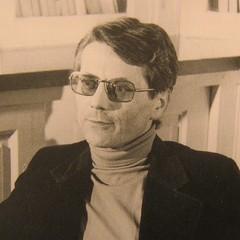
Michel de Certeau
Michel de Certeau

Michel de Certeau (May 17, 1925 - January 9, 1986) was a prominent French sociologist and philosopher known for his research on the practices of everyday life. His work delved into the dynamics of power, space, and time, and how individuals create their own spaces within structured societies. more

You May Also Like

“Genius loci cannot be designed to order. It has to evolve, to be allowed to hapen, to grow and change from the direct efforts of those who live and work in places and care about them...No matter how sophisticated technical knowledge may be, the understanding of others' lives and problems will always be partial. Just as outsiders cannot feel their pain, so they cannot experience their sense of place. I believe, therefore, that it is impossible to make complete places in which other poeple can live. And, in a world dominated by international economic processes and global telecommunications, there can be no return to an environment of integrated and distinctive places.”

Author:Edward Relph

“Baru was Farrier's monument, his exemplar, his masterpiece. A degenerate child molded into a brilliant Imperial agent. A tribadist who, even when dispatched into rebel woods to consort with warrior duchesses, enforced her own chastity until the night before the end. A traitor who would voluntarily return to Falcrest, to her own repression and to Farrier's control. Because she believed she was a savant, a hard woman, someone who sacrificed what she must in order to do what was necessary. Someone who *had* to be alone. Behold the chains he placed on you. His law lived in Baru. Everything she accomplished was tainted by it. If I show you favor, woman, then you will die. And through that death I will progress. She wore an invisible mask: the laughing face of Cairdine Farrier, carved into the skull of her soul.”

“E se lo stato non è cambiato, è comunque riuscito ad appropriarsi del mito popolare partigiano, a farne pilastro portante di una rifondazione più apparente che reale, con una soluzione di continuità troppo scarsa rispetto al passato. Quando la mitologia popolare diventa Mitologia di Stato è già spacciata. Smette di essere patrimonio collettivo e diventa materia per omelie istituzionali, diventa Memoria: una triste religione laica, amministrata dai sacerdoti di turno. E' così che dietro al "Mai più!" proclamato dai palchi e dalle tribune, si nasconde la coazione a ripetere, la possibilità che tutto torni nelle forme nuove e assai più moderne, "democratiche", del presente che ci viene consegnato.”

“Shabda, Transcendent Word, or logos ( λόγος ) in Greek, is the exclusive means by which transcendent truths are revealed. This is the case because shabda, being of the nature of the spiritual, corresponds in essence with the spiritual nature of transcendent truths. It is only via consciousness that we can know consciousness. It is only via spirit that we can know Spirit. It is only via atman (our individual soul) that we can know Brahman (God). It is only through shabda that we can know transcendent truths. Shabda represents the essential nature of spiritual realities as they exist in the form of trans-empirical vibrational frequency (thus Word, logos, etc.). Truth, being an eternal and living reality, can be accessed by human beings who have purified themselves, and who have absorbed their subjective consciousness in the Absolute supreme subjective consciousness (God), to such a degree that qualitative separation between themselves and God has ceased to exist. At this point, the medium (pramana) between knower (pramatr) and object of knowledge (prameya), which in this case is God, has evaporated. Thus, shabda is the only means of knowing in which we transcend even the use of a medium. In such a state of oneness with the Divine, the sage now has the ability both to know the transcendent truth, as well as to reveal the transcendent truth of the Divine for all the world to know. Thus, Veda, or perfect scriptural authority comes into being as a result of such direct, non-mediated insight into the nature of the Divine on the part of the sage. Word, as the eternal transcendent reality revealed to sages in deep states of meditative absorption (samadhi), becomes "the Word" as written scripture when these very same sages then write their realizations down.”