Quotessence
Home / Quotes / Quote by William Faulkner

Quote by William Faulkner

Work

As I Lay Dying

William Faulkner's 'As I Lay Dying' is a narrative told from multiple perspectives, focusing on the Bundren family's journey to bury their mother in a distant town. The novel delves into themes of identity, fate, and the American South, showcasing Faulkner's distinctive prose style and his exploration of the human condition. more
Author

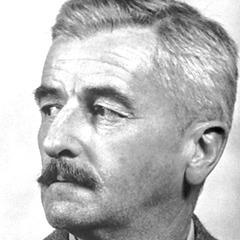
William Faulkner
William Faulkner

William Faulkner, an American writer born on September 25, 1897, and died on July 6, 1962. Known for his unique narrative techniques and profound descriptions of Southern society and history, Faulkner is considered one of the great novelists of the 20th century. more

You May Also Like

“When face scans replace physical passports, global mobility essentially becomes a digital identity record with a set of inequalities programmed in, fed by a sophisticated and dangerous surveillance infrastructure. We run the risk of having technological innovation without the necessary rights and protections. A century after the invention of passports, and with all the tech we have available today, a fundamental update is long overdue. The opportunity for passport innovation isn’t in the hardware, it’s in the software—the ideas driving how we manage global movement.”

“I refuse to accept the assertion of any historian who erroneously believes that women have no right to use their freedom without being considered corrupt or immoral, while men have been able to do whatever they want and indulge the most absurd and ridiculous whims, without being judged, repudiated or prevented from going where they choose, with no concern about not being paid attention to, respected or sought after. We are going to put an end to those unequal laws-where the few have a lot and the many have a little-in order to finally secure peace for the just and achieve the truth and justice that our sex deserves.”

“In his 1996 annual report, Max Yalden, head of the Human Rights Commission of Canada declared, once again, as he has for the past nine years, that the most pressing human rights problem facing Canada is the plight of its First Peoples. The successes associated with mainstream Canadian society continue to elude the aboriginal peoples dispersed across Canada; an overwhelming number of aboriginal peoples live in third world conditions in one of the most affluent nations in the world. During the nine years in question, and indeed since the dawn of white settlement in Canada, the aboriginal peoples have not been passive recipients of all that successive governments have meted out. Aboriginal peoples have fought and continue to fight for a foothold in Canadian society; for political, social, legal and economic equality; to be heard, to be recognized, and to be treated as equals in a society that has, by both subtle and blatant means, relegated them to the margins. In spite of all that has occurred, aboriginal peoples continue to survive in Canada. And that achievement in and of itself is quite remarkable in face of the many attempts to destroy, subdue, control and subjugate them. Furthermore, the natural resources of which the aboriginal peoples were once the only users and guardians continue to be expropriated and exploited without compensation. When the resources being expropriated are on lands under treaty negotiations, the expropriation has been accelerated by companies eager to get as much wealth from the resources as possible before the lands are “won” under land claims agreements by aboriginal groups.”

“Those who ate the meat, she claimed, were only indirectly responsible. I took the opposite position, holding that those who benefited at a distance, delegating this terrible work to others while disclaiming responsibility for it, bore more moral responsibility, particularly in contexts like the slaughterhouse, where those with the fewest opportunities in society performed the dirty work.”

“Stalin formulated the economic aims of socialism as: “The securing of the maximum satisfaction of the constantly rising material and cultural requirements of the whole society.” [Economic Problems of Socialism in U.S.S.R., English edition, p. 45.] Taken positively, this has no more content than any metaphysical slogan; like the slogan “All men are equal,” it expresses its point of view through negations. “Constantly rising” requirements means that there is no foreseeable limit to the possible rise in productivity (for, of course, it is not so much the needs as the means to satisfy them that will continually increase). “Cultural” requirements means that growing wealth is not to be confined to physical goods (though these alone enter into the Marxist definition of output). “The whole society” implies a condemnation of the arbitrary distribution of wealth. There is nothing in this that the orthodox economists can object to. Indeed, it takes the very words out of their mouth. But they were wont to excuse the inequality generated by private property in the means of production because it was necessary to make total income greater. If income grows faster without it, they are in an awkward situation. Perhaps this is why they have crept off to hide in thickets of algebra and left the torch of ideology to be carried by the political argument that capitalist institutions are the bulwark of liberty. [pp. 109-110]”